
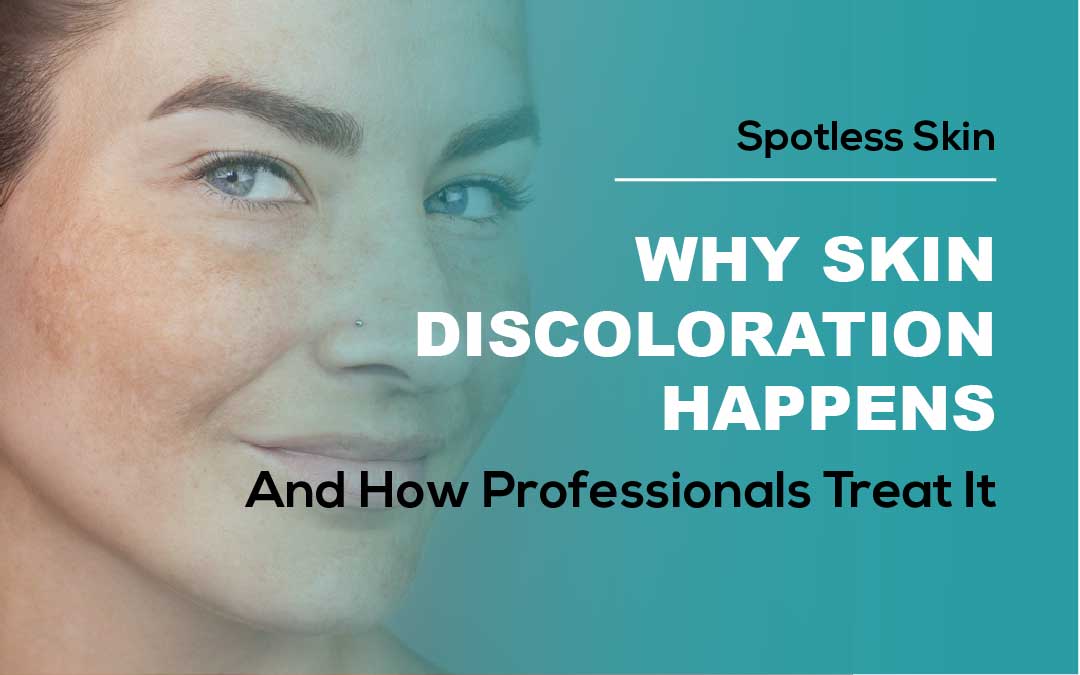
Have you noticed dark patches, uneven tone, or spots on your skin that seem to become more noticeable over time? If so, you’re not alone. Skin discoloration is one of the most common skincare concerns people experience and it can feel frustrating when dark spots seem to linger no matter what products you try.
The good news is that understanding why discoloration happens is the first step toward improving it. While some forms of pigmentation are stubborn, there are effective skincare habits and professional treatments that can help create a brighter, more even-looking complexion.
In this guide, we’ll explore the most common causes of skin discoloration, explain why it develops, and discuss how professional treatments can help improve uneven skin tone over time.
What Is Skin Discoloration and Why Does It Happen?
Skin discoloration, often referred to as hyperpigmentation, happens when the body produces too much melanin, the natural pigment that gives skin its color. When melanin production becomes uneven, darker patches or spots can develop over time.
This process usually develops gradually. Many people first notice small spots or patches that become more visible over time, especially after years of sun exposure or recurring inflammation.
According to research reviewed in Harvard Health’s guide to hyperpigmentation, pigmentation disorders can be triggered by several factors, including UV exposure, hormones, inflammation, and aging.
Some of the most common contributors include:
- Sun exposure
- Acne and skin inflammation
- Hormonal fluctuations
- Aging
- Skin irritation or injury
Because pigmentation develops in different ways, there is rarely a one-size-fits-all solution.
3 Common Types of Skin Discoloration
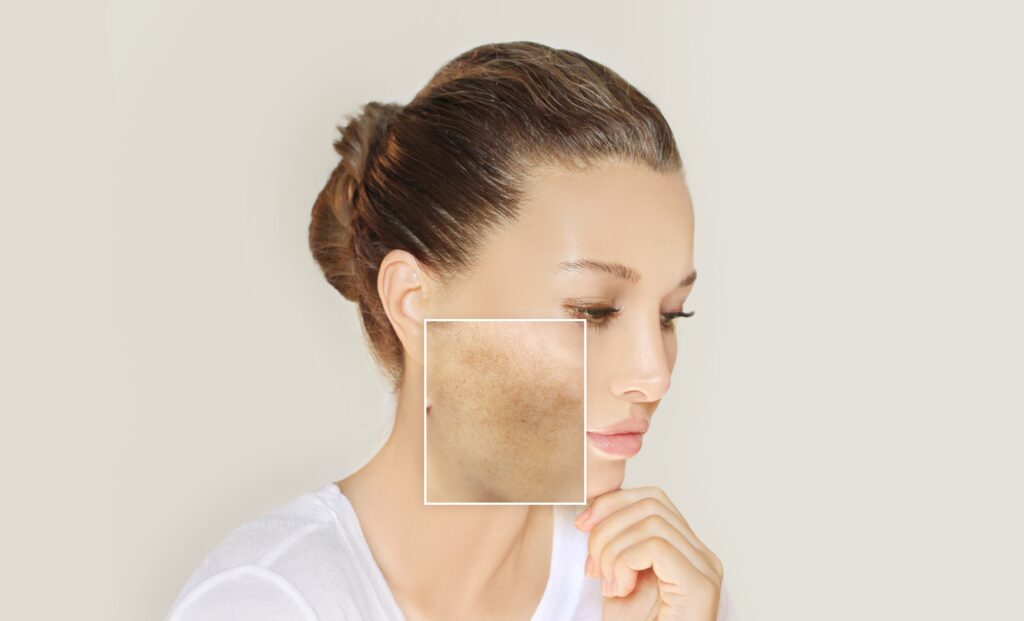
Not all discoloration behaves the same way. Understanding the type of pigmentation you have can help determine the most effective treatment approach.
Sunspots (Age Spots)
Sunspots often appear after years of sun exposure, especially in areas that receive the most UV damage. Here in Florida, consistent sunshine means many people notice these spots appearing on the face, chest, shoulders, and hands.
These sun damage spots often appear gradually and become darker over time if left unprotected.
Post-Inflammatory Hyperpigmentation
Post-inflammatory hyperpigmentation occurs after acne, cuts, burns, or skin irritation. Once the inflammation heals, excess pigment can remain behind as dark marks.
This type of discoloration is especially common after picking at blemishes or experiencing recurring breakouts.
Melasma
Melasma appears as larger patches of discoloration, usually on the forehead, cheeks, upper lip, or jawline. Hormonal changes are often a major trigger, making melasma common during pregnancy or periods of hormonal fluctuation.
Each of these skin pigmentation types responds differently to treatment, which is why professional evaluation can be so valuable.
Everyday Causes of Skin Discoloration
Many people are surprised to learn that daily habits often contribute significantly to pigmentation.
UV Exposure
Sun exposure remains one of the leading skin discoloration causes. When skin encounters UV radiation, your skin naturally produces more melanin to protect itself from UV damage.
Over time, repeated exposure can create visible dark spots on skin and worsen existing discoloration. Without daily sunscreen use, even treated pigmentation can quickly return or become more noticeable.
Inflammation
Acne, irritation, allergic reactions, and skin trauma can all trigger excess pigment production. The darker the inflammation, the more likely pigment changes may occur afterward.
Hormonal Changes
Hormonal changes can trigger melanin production, leading to uneven patches that are often difficult to fade without targeted treatment.
Aging and Environmental Stress
As skin ages, years of cumulative UV exposure and environmental stressors become more apparent. Pigmentation that may have been hidden beneath the surface can gradually become more visible.
How Pigmentation Develops Beneath the Skin
To understand why discoloration can be so persistent, it helps to know how melanin works.
Melanocytes produce melanin when triggered by UV light, inflammation, or hormones. When production becomes excessive, pigment clusters form in specific areas.
Some pigmentation sits close to the surface, while deeper pigment deposits form below the outer layers of the skin. These deeper deposits often take longer to fade and may not respond fully to topical products alone.
If you’d like a deeper look at how to build a simple, effective routine that supports fading discoloration, explore our Daily Skincare Routine Guide for a practical starting point.
Once you understand what causes discoloration, it becomes easier to see why professional treatments can make such a difference.
Professional Skincare Treatments for Skin Discoloration
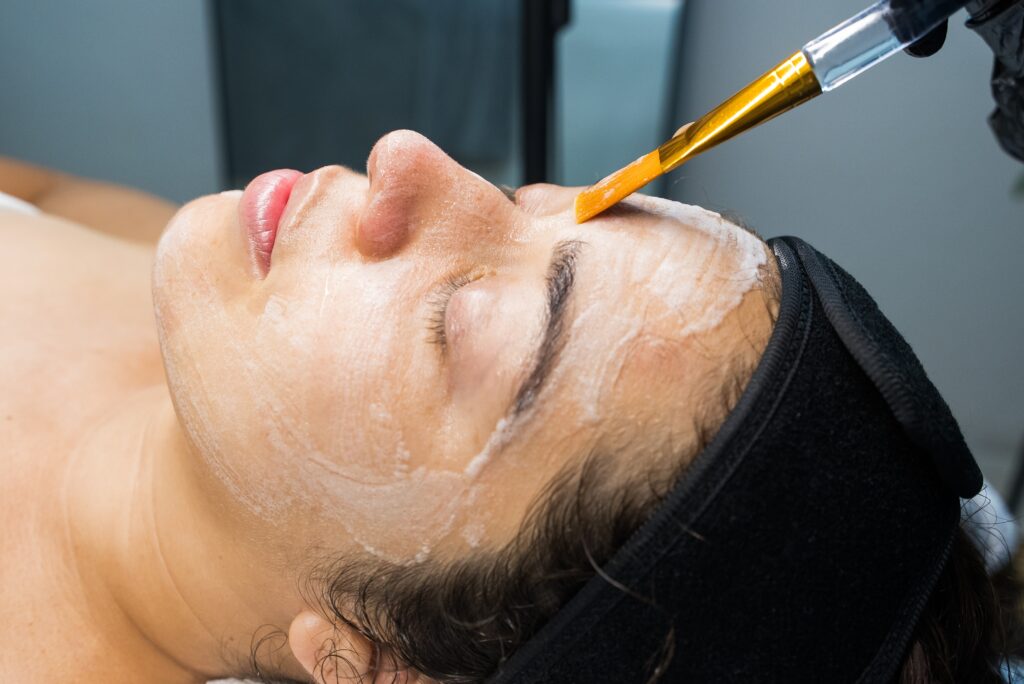
While at-home products can certainly help, professional treatments often provide more noticeable improvements because they target pigmentation more effectively.
Popular hyperpigmentation treatments include:
Chemical Peels
Chemical peels encourage controlled exfoliation and promote cell turnover. By removing damaged surface layers, they can gradually improve discoloration and uneven tone.
Advanced Corrective Facials
Customized facials often combine exfoliation, hydration, and brightening ingredients to support more even-looking skin.
Laser Treatments
Certain laser technologies target pigment directly and can help break down deeper discoloration that topical products struggle to reach.
Skin Resurfacing Treatments
Professional resurfacing treatments improve texture and tone simultaneously, helping create smoother, brighter skin.
The most effective approach depends on:
- Skin type
- Sensitivity level
- Pigment depth
- Overall skin goals
Why Professional Treatments Can Be More Effective Than At-Home Solutions
One of the biggest advantages of professional care is accurate diagnosis.
A trained esthetician can determine:
- What type of pigmentation you have
- How deep the pigment sits
- Which treatments are appropriate for your skin
Research published in Skin Pigmentation Types, Causes and Treatment – A Review highlights how different pigmentation disorders respond to different interventions, reinforcing the importance of personalized treatment planning.
Professional treatments also allow:
- Controlled exfoliation
- Stronger active ingredients
- Safer targeting of deeper pigment
- Reduced risk of worsening discoloration
This often produces faster and more noticeable results than relying solely on creams or serums.
How to Support Your Skin After Treatment
Treating pigmentation is only part of the process. Maintaining results requires ongoing care.
Daily habits matter just as much as professional treatments.
To support your results:
- Wear sunscreen every day
- Use gentle skincare products
- Avoid picking at blemishes
- Maintain hydration
- Follow your esthetician’s recommendations
These habits help prevent new pigmentation from forming while supporting a more even complexion.
Combining Professional Care with Maintenance
The best outcomes typically come from combining professional treatments with consistent home care.
Professional treatments help address existing discoloration, while maintenance routines help prevent new pigment from developing.
Regular check-ins with a skincare professional also allow treatment plans to evolve as your skin changes over time.
This balanced approach creates more stable, predictable improvements and supports healthier-looking skin long-term.
Take Care of Your Skin Discoloration
Skin discoloration can develop for many reasons, including sun exposure, acne, hormones, and aging. Because pigmentation occurs at different depths and through different biological processes, treatment often requires a personalized approach.
With the right combination of skincare habits, sun protection, and professional guidance, many forms of hyperpigmentation can be improved significantly over time.
Ready to Create a Brighter, More Even Complexion?
Looking for a way to reduce dark spots and improve your skin tone? Check out Glowing Results Skin Spa and book your professional consultation to get started on a more even, radiant complexion.
FAQs
Q: What causes skin discoloration?
A: Skin discoloration is caused by excess melanin production triggered by sun exposure, inflammation, hormonal changes, and aging.
Q: Can hyperpigmentation go away naturally?
A: Some mild discoloration may fade after some time, but deeper pigmentation often improves faster with professional treatment and consistent skincare.
Q: What professional treatments help reduce dark spots?
A: Chemical peels, corrective facials, and laser treatments are among the most common professional options for targeting stubborn pigmentation.
Q: How can I prevent new discoloration from forming?
A: Daily sunscreen use, gentle skincare, and avoiding unnecessary irritation are some of the most effective ways to prevent future pigmentation concerns.