
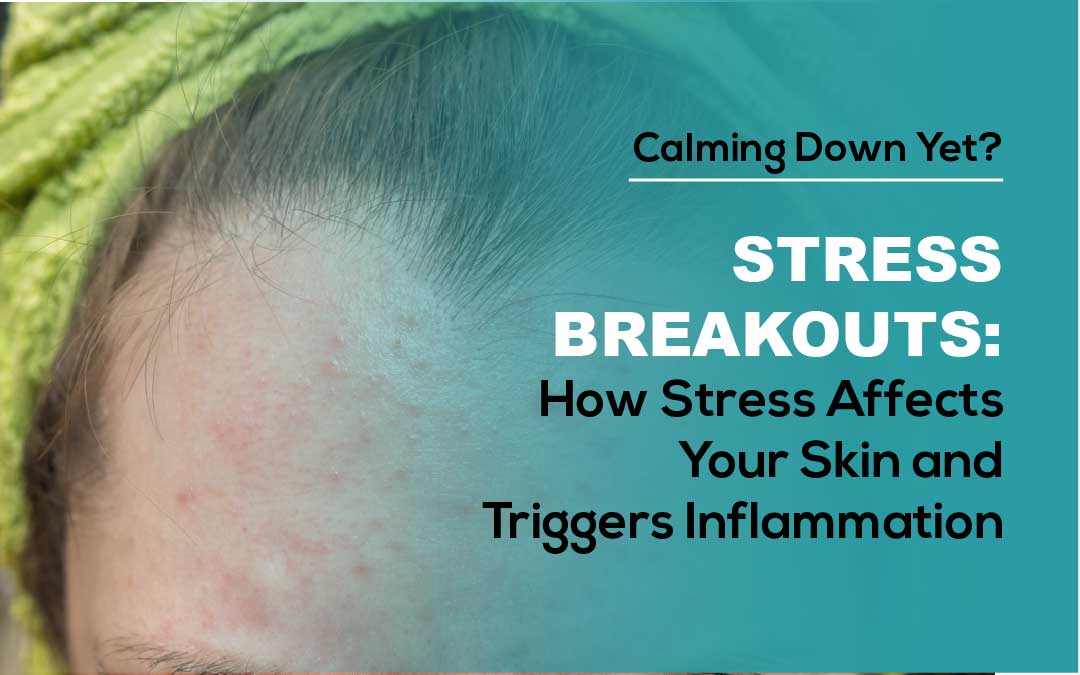
Ever notice your skin breaking out more often, feeling irritated, or looking more inflamed than usual during a stressful week?
Stress could be playing a bigger role than you realize.
Your skin is closely connected to internal processes in the body. When stress levels in the body increase , hormones, inflammation, sleep, and daily habits can all shift at the same time.
For some people, that may show up as acne. For others, it may look like redness, dryness, sensitivity, or a flare-up of an existing skin concern.
This guide will explain how stress breakouts develop, why stress can affect your skin, and what steps you can take to support a healthier, calmer complexion.
How Stress Affects Your Skin
Stress affects the body in many ways, and the skin is no exception. When you feel stressed, your body releases hormones such as cortisol along with other stress-related chemicals.
Cortisol, often called the “stress hormone,” and while it plays an important role in your body’s response system, elevated levels can influence how your skin behaves.
Stress may increase oil production in some individuals. When excess oil mixes with dead skin cells and buildup, pores can become more congested, making breakouts more likely.
This is why many people notice stress breakouts during busy work seasons, emotional stress, lack of sleep, or major life changes.
Stress can also increase inflammation throughout the body. Since acne, redness, rosacea, eczema, and irritation are often connected to inflammation, stressful periods may make these concerns feel more noticeable or harder to manage.
Research on stress-related skin changes has shown that psychological stress can affect inflammation, barrier function, and several common skin conditions, which helps explain why skin often reacts during difficult seasons of life. You can read more about this in this review on stress-induced changes of the skin.
Stress may also affect the skin barrier, which is the outer protective layer that helps keep moisture in and irritants out. When the barrier is weakened, skin may become more sensitive, dry, itchy, or reactive to products that normally feel fine.
Stressed skin does not always present as acne. Sometimes it simply feels uncomfortable, tight, or easily irritated.
Stress affects each person’s skin differently. One person may experience stress induced acne, while another may notice dry patches, flushing, or increased sensitivity. Understanding your own skin patterns can help you respond more calmly and effectively.
Why Stress Can Make Existing Skin Concerns Worse
Stress may not create new skin issues but can worsen existing ones.
If you already struggle with acne, rosacea, eczema, dryness, or sensitivity, stressful periods may intensify those symptoms.
Breakouts may appear more often, redness may last longer, or your skin may feel more reactive than usual.
This can be especially frustrating when your skincare routine has not changed, because it may seem like your products suddenly stopped working.
This happens because stress influences the skin internallyIncreased inflammation can make certain skin conditions more active, while changes in hormones and oil production can contribute to clogged pores.
At the same time, stress often impacts sleep, hydration, food choices, and daily routines– all of which can influence the skin.
The American Academy of Dermatology notes that stress can show up in the skin, hair, and nails, including through flare-ups of existing conditions.
Their guidance on how stress can show in your skin reinforces that these changes are common and worth paying attention to.
This is important because skin irritation from stress can sometimes look like a product reaction, even when the real issue is your body’s internal stress response. If you immediately switch products or add strong treatments, you may accidentally create more irritation instead of calming the skin.
Common Signs Your Skin May Be Reacting to Stress
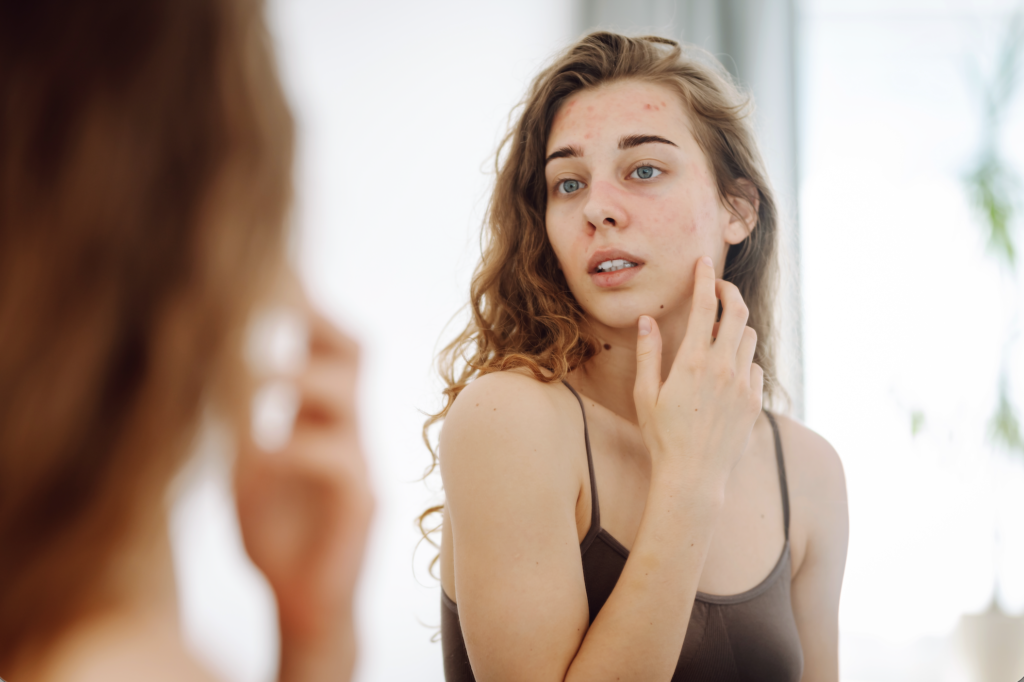
Stress-related skin changes extend beyond acne.. While breakouts are one of the most common signs, your skin may respond in several different ways.
Common signs include::
- Breakouts around the chin, jawline, or cheeks
- More oiliness than usual
- Redness or flushing
- Dry, tight, or rough patches
- Skin that stings when applying products
- Slower healing after blemishes
- A dull or tired-looking complexion
- Increased sensitivity overall
Stress may increase oil production in some individuals.For others, stress may trigger congestion, small bumps, or irritation that feels different from their usual skin pattern.
Noticing timing patterns can help identify stress as a trigger.. Did your skin flare after a stressful deadline, poor sleep, travel, emotional strain, or a busy season? If the same pattern repeats, stress may be one of your triggers.
It is also helpful to notice whether your skin is taking longer to recover. Stress can affect the skin’s natural repair process, which means blemishes, redness, or irritation may linger longer than expected.
During stressful periods, consistency matters. Your skin needs consistency, not frequent product changes. A gentle cleanser, lightweight moisturizer, sunscreen, and targeted treatment when needed can often support the skin better than an aggressive routine.
If recurring breakouts are frustrating you, check out our guide on common skincare mistakes that may be contributing to acne or irritation.
Supporting Your Skin During Stressful Periods
When your skin feels inflamed, itchy, or reactive, the best approach is usually to simplify. Stressed skin benefits from gentle care, hydration, and routine.
Start with a mild cleanser that removes buildup without stripping the skin. Avoid scrubs, harsh exfoliants, and strong active ingredients if your skin is already irritated. Follow with a moisturizer that supports the skin barrier and helps reduce dryness or tightness.
Internal hydration also plays a role in skin health. When the body is under stress, people often drink less water, sleep less, and rely more on caffeine or convenience foods. While skincare products help externally, healthy skin also benefits from internal support.
Helpful habits include:
- Drinking enough water throughout the day
- Prioritizing sleep when possible
- Eating balanced meals with skin-supportive nutrients
- Avoiding picking at breakouts
- Keeping your skincare routine consistent
- Using sunscreen daily
- Managing stress in small, realistic ways
This does not mean you need a perfect lifestyle to have healthy skin. It simply means your skin often responds better when you support both the outside and the inside.
Professional skincare treatments can also be helpful during stressful seasons, especially when breakouts, irritation, or redness become difficult to manage on your own.
Calming facials, gentle hydration treatments, and personalized product guidance can help reduce guesswork and support a more balanced complexion.
How Professional Skincare Can Support Stressed Skin
When your skin is reacting to stress, it can be hard to know what it actually needs. Is it acne? Irritation? A damaged skin barrier? Too much oil? Not enough hydration? This is where professional skincare guidance can make a real difference.
A professional skin evaluation helps identify what may be contributing to ongoing breakouts, redness, dryness, or sensitivity. Instead of guessing or buying product after product, an esthetician can look at your skin’s current condition and recommend a routine that fits what your skin is actually experiencing.
At Glowing Results Skin Spa, calming facials and supportive skincare treatments are designed to help stressed skin feel more comfortable and balanced.
These treatments may focus on hydration, barrier support, gentle extractions, soothing masks, or calming ingredients depending on what your skin needs most.
If you want to explore more guidance around stressed skin and treatment options, you can search our resources on stressed skin for helpful information from Glowing Results Skin Spa.
Professional skincare treatments may help with:
- Reducing congestion and buildup
- Calming visible redness
- Supporting hydration
- Improving skin comfort
- Creating a more personalized skincare routine
- Reducing product trial and error
- Helping skin feel more balanced during stressful periods
The most important thing to remember is that stressed skin often needs patience. A single facial may help your skin look and feel better, but long-term improvement usually comes from consistent care, both at home and in the treatment room.
Let Us Help Manage Your Stress Breakouts
Stress can affect your skin in more ways than one. While many people think of stress breakouts as simple acne flare-ups, stress may also contribute to redness, dryness, sensitivity, irritation, excess oil, and slower recovery from blemishes.
Understanding how stress affects your skin can help you make better decisions about your skincare routine and overall skin health. Instead of reacting with harsh products or constantly changing your routine, a calmer approach often works best.
Gentle cleansing, consistent moisturizing, daily sunscreen, hydration, sleep, stress management, and professional skincare support can all help your skin feel more balanced. And if flare-ups become too difficult to manage on your own, working with a skincare professional can help you better understand what your skin needs.
Are you dealing with constant breakouts, ongoing redness, or irritated skin during stressful seasons?
Contact our helpful team here at Glowing Results Skin Spa today to learn how a personalized professional skincare routine could be the exact thing you need to fight stress breakouts.
FAQs
Q: Can stress cause breakouts?
A: Yes. Stress can contribute to breakouts by increasing inflammation and influencing oil production, which may make acne flare-ups more likely. When stress levels rise, the skin may become more congested, reactive, or slower to heal.
Q: What are stress breakouts?
A: Stress breakouts are blemishes or acne flare-ups that develop or worsen during periods of emotional or physical stress. They often appear alongside other signs of stressed skin, such as increased oiliness, redness, or sensitivity.
Q: Can stress affect my skin even if I don’t usually have acne?
A: Yes. Stress does not only contribute to acne. It can also increase redness, dryness, sensitivity, excess oil production, or make existing skin conditions like rosacea or eczema more noticeable.
Q: Can professional skincare treatments help with stressed skin?
A: Yes. Professional skincare treatments can help improve common signs of stressed skin, including breakouts, redness, dryness, and irritation. A licensed esthetician can recommend calming facials and personalized products based on your skin’s unique needs.