
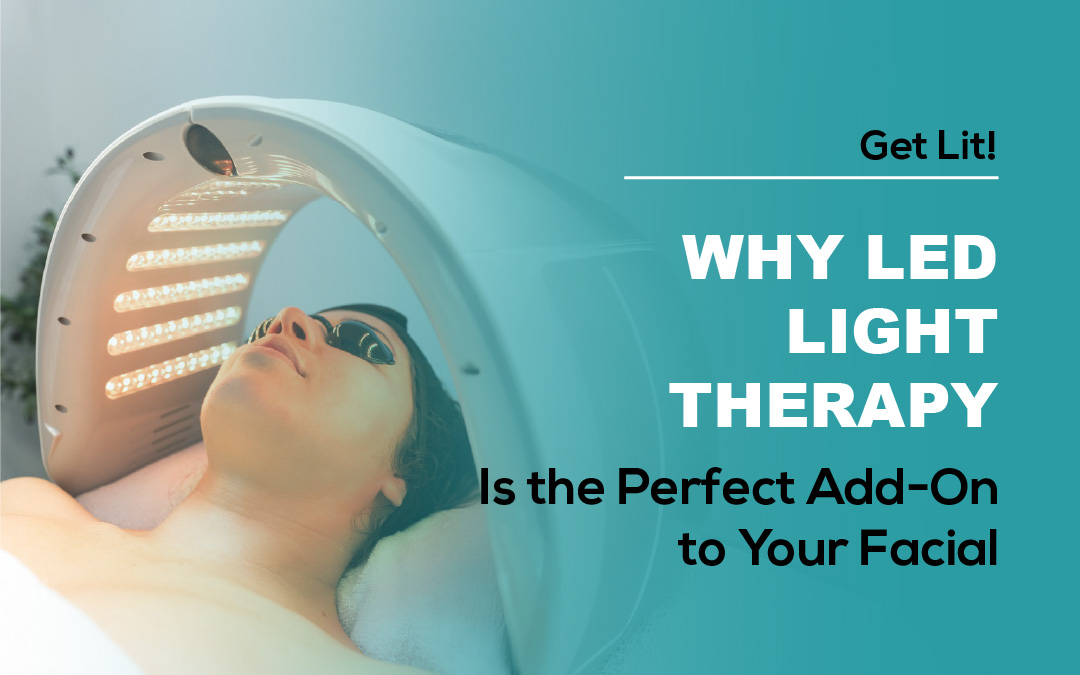
You probably already know a good facial can leave your skin feeling refreshed, hydrated, and cared for– but have you considered adding LED Light Therapy to your treatment?
LED has become a popular addition to professional facials because it offers another way to customize a treatment without needles or aggressive resurfacing.
Rather than replacing cleansing, exfoliation, masks, hydration, or other facial steps, LED can be added to the appointment to support specific skincare goals.
Depending on the wavelength used, light therapy may be selected to complement concerns such as acne, redness, visible signs of aging, or overall skin rejuvenation. The key is choosing the right type of light for your skin rather than treating LED as a one-size-fits-all solution.
In this guide, we’ll explain what LED Light Therapy is, what different wavelengths are commonly used for, what the treatment feels like, and why it can be such a useful add-on to a professionally customized facial.
What Is LED Light Therapy?
LED stands for light-emitting diode. In skincare, LED Light Therapy uses specific wavelengths of visible or near-infrared light directed toward the skin for a set period of time.
Unlike treatments that intentionally exfoliate or create controlled injuries in the skin, LED is non-invasive. There are no needles, incisions, or abrasive tools involved.
The treatment also does not use ultraviolet light. Cleveland Clinic describes LED Light Therapy as a non-invasive treatment that uses different wavelengths of light at different depths within the skin.
Providers may use LED alone or combine it with other skincare treatments, including facials.
That combination is one reason why LED naturally works well as an add-on.
A professional facial might already include:
- Cleansing
- Gentle exfoliation
- Extractions when appropriate
- Hydrating serums
- Targeted masks
- Facial massage
- Moisturizer
- Sunscreen
LED can be incorporated as another targeted step based on what your skin needs that day.
Wavelength matters because different types of light penetrate the skin differently. Red and blue are among the most commonly discussed and researched wavelengths in cosmetic skincare, while some professional devices also offer additional colors or combinations.
The important thing to remember is that LED should be selected intentionally. More colors do not automatically mean better results.
How Different LED Lights Support Different Skin Goals
If you have ever seen a multicolored LED mask or professional panel, you may have wondered why there are so many different settings.
The answer comes down to the wavelength of the light.
Different wavelengths reach different depths within the skin and interact with tissue differently. That means the light selected for acne-focused care may not be the same one used for visible signs of aging.
Red Light
Red light therapy for skin is commonly associated with rejuvenation and signs of aging.
Cleveland Clinic notes that red LED light may help reduce inflammation and support collagen-related processes. Red light is therefore often discussed in connection with concerns such as:
- Fine lines
- Rough-feeling skin
- Redness
- Loss of firmness
- Overall skin rejuvenation
The American Academy of Dermatology also describes red light therapy as a non-invasive treatment that may be used as part of a larger skincare plan. Research cited by the AAD suggests red-light LED devices may offer subtle to noticeable improvements for certain concerns, although results vary and more research is still needed.
Because collagen production naturally decreases as we age, red light often gets attention as part of professional anti-aging skincare. It should not be viewed as a way to instantly “replace” collagen, but rather as one supportive tool within a broader treatment plan.
Blue Light
Blue LED light works closer to the skin’s surface and is commonly used in acne-focused care.
Research has explored blue light for its effects on acne-associated bacteria, which is why professional providers may select it for certain clients dealing with mild to moderate breakouts.
Blue light is not a complete acne treatment on its own. It does not physically remove blackheads or clogged pores, for example, and it may be used alongside other appropriate acne treatments rather than replacing them.
Green and Yellow Light
You may also see green, yellow, or amber settings on certain professional LED systems.
These wavelengths are sometimes marketed or incorporated into treatment plans for concerns such as uneven-looking tone, visible redness, or discoloration. However, the research supporting these uses is not as standardized or as established as the evidence surrounding red and blue wavelengths.
That does not necessarily mean they have no role. It means expectations should stay realistic, and the specific device, wavelength, treatment protocol, and your skin condition all matter.
WebMD’s overview of LED light therapy also explains that professional systems may use several colors and wavelengths for different skincare concerns, with red, blue, near-infrared, and other colors penetrating to different depths.
Your esthetician should be able to explain which light is being selected and why.
That conversation is much more useful than simply asking for “all the colors.”
Why Add LED Light Therapy to Your Facial?
The biggest reason LED makes sense as a facial add-on is that it does not need to compete with the rest of your treatment.
A facial and LED have different jobs.
Your facial may focus on:
- Removing surface buildup
- Hydrating the skin
- Improving the feel of texture
- Clearing congestion
- Applying targeted masks and serums
- Supporting the skin barrier
- Creating a refreshed complexion
An LED facial treatment can then add another targeted layer of care based on your goals.
For example, a client receiving a hydration-focused facial may also be interested in red light as part of a broader skin rejuvenation strategy.
Another client receiving an acne-focused treatment may have blue light incorporated when appropriate.
The goal is not to add LED simply because the technology is available.
The goal is to ask: Will this extra step make sense for my skin today?
That distinction matters.
The Benefits of LED Light Therapy as an Add-On
Some of the practical benefits of LED Light Therapy are connected to how easily it can complement other services.
LED is generally:
- Non-invasive
- Needle-free
- Comfortable for many clients
- Easy to combine with certain facial services
- Adjustable based on wavelength and skin goals
- Associated with little or no standalone recovery time
Cleveland Clinic notes that professional LED treatments are commonly used alongside other skincare treatments and generally do not involve the type of recovery associated with procedures that intentionally damage the skin.
That makes LED appealing for clients who want facial treatments for glowing skin but do not necessarily want an intensive resurfacing procedure every time they visit the spa.
It also creates more flexibility.
One facial appointment can focus on several complementary goals without automatically making the treatment harsher.
How LED Can Enhance Your Facial
A simple way to think about it is this:
The facial cares for the skin. LED adds another targeted form of support.
Suppose your facial includes cleansing, gentle exfoliation, hydration, and a customized mask. Your esthetician may decide that an appropriate LED wavelength would fit naturally into that plan.
Instead of treating each service as a separate skincare trend, the provider builds one cohesive appointment.
That is what personalized professional skincare should look like.
The right combination depends on factors such as:
- Your current skin condition
- Sensitivity
- Breakouts
- Redness
- Dryness
- Visible signs of aging
- Treatment history
- Medications
- Previous reactions
- Overall skincare goals
For clients interested in visible aging and collagen support, it is also useful to understand what is happening beneath the surface as skin changes. Our guide to the science of aging skin and professional treatments explains collagen, elasticity, photoaging, and professional skin rejuvenation treatments in more detail.
LED may be part of that larger strategy, but it does not replace daily sunscreen, hydration, appropriate active ingredients, or other treatments when those are needed.
What Can You Expect During an LED Treatment?
LED sounds high-tech, but the actual experience is usually straightforward.
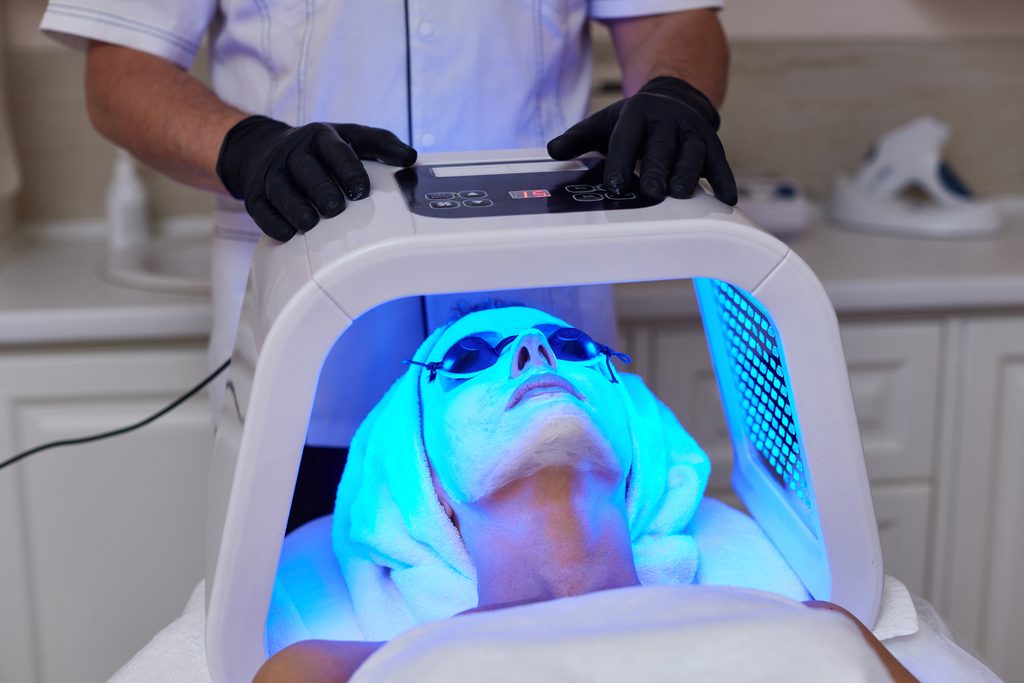
If LED is being added to a facial, your skin will already be prepared according to the other steps in your treatment.
Typically, the process looks something like this:
- Your esthetician evaluates your skin and treatment goals.
- Makeup, sunscreen, and surface buildup are removed.
- The appropriate facial steps are performed.
- Protective eyewear is provided when indicated.
- The LED device is positioned above or near the treatment area.
- The selected wavelength is applied for a set amount of time.
- The facial continues or finishes with appropriate skincare and protection.
Cleveland Clinic notes that in-office LED sessions are often performed while the client lies comfortably beneath the device and may involve some warmth but should generally not be painful.
That is one of the reasons an LED facial treatment works so well for clients who want professional care without another aggressive step.
Does LED Hurt?
LED itself is generally designed to be comfortable.
There are no needles entering the skin, and the treatment does not intentionally create the type of wound associated with microneedling, ablative lasers, or stronger resurfacing procedures.
You may notice:
- Gentle warmth
- Bright light
- Mild temporary redness in some cases
- Temporary sensitivity depending on your skin and the other treatments performed
If anything feels uncomfortable, tell your esthetician.
A spa treatment should never become a test of how much discomfort you can tolerate.
Is There Downtime?
Standalone LED typically requires little to no downtime.
However, there is an important distinction: your aftercare depends on the entire facial, not just the LED portion.
If your appointment also included:
- A chemical peel
- Extractions
- Strong exfoliation
- Microneedling
- Another corrective service
then your aftercare may be more involved.
Your esthetician should explain what you can use afterward, when to resume active ingredients, and how carefully you need to protect the skin from sun exposure.
Because we are in Florida, that final step deserves extra attention. Regardless of how gentle your facial feels, daily broad-spectrum sunscreen remains important.
Why Professional Guidance Still Matters
LED is a good example of why skincare should not simply be a collection of trending treatments.
Professional skincare is not about fitting every available service into one appointment.
It is about identifying what your skin needs and leaving out what it does not.
A thoughtful esthetician should consider:
- What condition your skin is in today
- What treatments you already use
- What your priorities are
- Whether your skin is irritated or compromised
- Whether LED is appropriate with the rest of your service
- Which wavelength makes sense
- How frequently treatment should be repeated
This also gives you an opportunity to ask questions.
Before an LED session, consider asking:
- Which wavelength are you using?
- Why are you selecting that wavelength?
- What skincare concern are we targeting?
- How does LED complement the rest of my facial?
- How often would you recommend it?
- Are there any reasons LED may not be appropriate for me?
- What should I do after treatment?
These questions help turn a trendy add-on into an informed treatment decision.
Who Should Be More Cautious?
LED Light Therapy is not automatically appropriate for everyone.
Cleveland Clinic advises that people taking certain photosensitizing medications or those with certain medical or eye conditions may not be good candidates.
The American Academy of Dermatology also recommends professional medical guidance for some people considering red-light devices, especially when existing conditions or medications could increase sensitivity.
People with darker skin tones may also want to discuss visible-light sensitivity with a dermatologist, particularly when using at-home red-light devices, because the AAD notes that visible light can contribute to hyperpigmentation in some individuals.
The takeaway is not that LED is dangerous.
It is that personalization still matters.
No treatment should be selected solely because someone saw it on social media.
Professional LED vs. At-Home LED Devices
The growth of at-home masks and light panels has made LED easier to access, but at-home and professional treatments are not necessarily equivalent.
Professional equipment may use different intensities, configurations, wavelengths, and treatment protocols than a consumer mask.
Cleveland Clinic notes that professional in-office devices may be stronger than at-home options, while WebMD similarly explains that professional systems can provide more powerful treatment than many home devices.
At-home care may still be useful for some people, particularly for maintenance when recommended appropriately. But buying a mask does not replace a skin evaluation.
Before purchasing a device, pay attention to:
- The wavelength it uses
- What concern the device is designed for
- Whether the manufacturer provides clear instructions
- Eye protection requirements
- Contraindications
- Your medications
- Your skin tone and sensitivity
- Whether the device is FDA-cleared
FDA clearance also should not be confused with a guarantee of results. The AAD explains that clearance relates to a device safety classification rather than proof that every user will achieve the advertised outcome.
If you are curious about red light specifically, our guide to finding red light therapy near you offers another introduction to how this technology is used and what to consider before trying it.
How Often Should You Add LED Light Therapy?
There is no universal treatment schedule that fits every person or every LED device.
Frequency may depend on:
- The wavelength used
- Device strength
- Skin concern
- Whether LED is standalone or part of a facial
- Your treatment plan
- How your skin responds
- Other professional services you receive
Cleveland Clinic notes that achieving noticeable improvements may require a series of treatments rather than a single appointment.
That fits an important principle in skincare: many results happen gradually.
An LED add-on can make your facial feel more customized, but one twenty-minute light session should not be expected to erase years of skin concerns.
Your esthetician can help determine whether LED should be:
- Used occasionally
- Added to several treatments in a series
- Incorporated into maintenance appointments
- Alternated with other services
- Avoided because another treatment makes more sense
The goal is always a plan—not treatment overload.
LED Light Therapy Works Best as Part of a Bigger Skincare Strategy
LED can be a useful tool, but healthy-looking skin rarely comes from one technology alone.
The strongest plans combine appropriate professional treatments with good everyday habits.
That may include:
- Gentle cleansing
- Consistent moisturizing
- Broad-spectrum sunscreen
- Antioxidants when appropriate
- Targeted acne or aging products
- Professional facials
- Thoughtful exfoliation
- Adequate hydration
- Regular skin evaluations
Think of LED as one piece of that larger puzzle.
Red light may complement a rejuvenation-focused plan. Blue light may have a role in certain acne-focused treatments.
Other wavelengths may be considered depending on the equipment, available evidence, and your individual goals.
But adding more lights does not automatically create healthier skin.
Thoughtful treatment selection does.
Add LED Light Therapy to a Facial That Already Fits Your Skin
LED Light Therapy can add another level of customization to a professional facial without replacing the essential work of cleansing, hydration, exfoliation, barrier support, and targeted skincare.
Different wavelengths may support different goals, and treatments such as red light therapy for skin are often considered as part of broader rejuvenation plans.
The best results come from keeping expectations realistic and choosing the wavelength and treatment schedule based on your individual skin.
If you are interested in trying LED, start with a conversation rather than a trend.
Give your next facial a little something extra.
Want to give your next facial a little something extra? Glowing Results Skin Spa can help you explore whether LED Light Therapy makes sense for your skin, your current routine, and the results you are hoping to achieve.
Book your facial today and let’s create a treatment plan that gives your skin the kind of targeted care it actually needs.
FAQs
Q: What is LED Light Therapy?
A: LED Light Therapy is a non-invasive treatment that uses specific wavelengths of visible or near-infrared light for different skincare goals. Depending on the wavelength, it may be used as a standalone service or incorporated into a professional facial or broader skincare plan.
Q: What are the benefits of LED Light Therapy for skin?
A: The potential benefits depend on the wavelength being used. Red light is commonly associated with skin rejuvenation, inflammation, and collagen-related processes, while blue light is frequently used in acne-focused care. LED may also complement professional facials without requiring an invasive procedure, although results vary and multiple sessions may be needed.
Q: Can LED Light Therapy be added to a facial?
A: Yes. LED can be added to certain facials when it fits the client’s skin condition and treatment goals. Your esthetician may use it alongside cleansing, exfoliation, hydration, masks, or other appropriate services to create a more customized appointment.
Q: How often should you get LED Light Therapy?
A: There is no single schedule that works for everyone. Frequency depends on the wavelength, device, skin concern, other treatments you receive, and how your skin responds. Your esthetician or dermatologist can recommend a schedule that fits your individual skincare plan.