
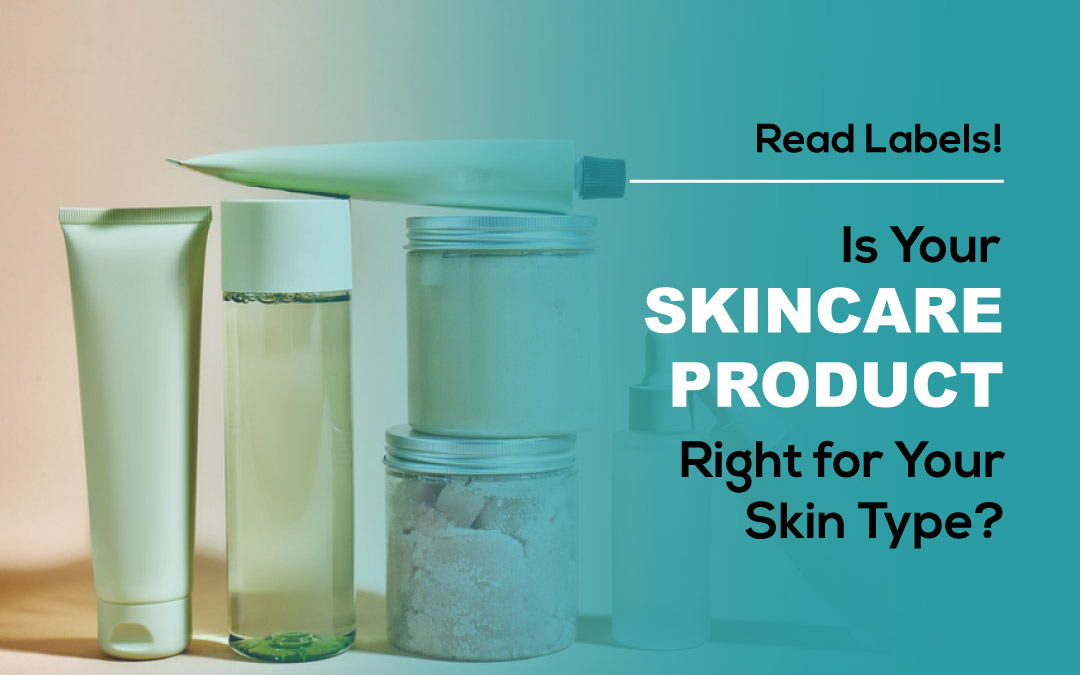
Ever try a skincare product because a friend loved it, only to wonder what all the excitement was about?
Their favorite moisturizer might leave your face feeling greasy. The cleanser that helped their breakouts might make your cheeks feel tight. Or you might finish a bottle of serum without being sure what it was supposed to change.
It happens. A product that works well for someone else may not be the right match for you.
The good news is that you don’t need to become an ingredient expert to make better choices. Start by noticing how your skin feels, what you’d like help with, and what happens when you use a product.
From there, it becomes easier to narrow down your options.
Let’s look at the different skin types, a few ingredients worth knowing, and some everyday signs that a product may need a second look. We’ll also talk about when asking for help can save you from buying yet another bottle you don’t need.
Start by Understanding Your Skin Type
Your skin type gives you a starting point when you’re choosing skincare.
It helps explain why one person enjoys a thick cream while another reaches for a light lotion. It can also help you decide which products to consider first, rather than browsing every bottle on the shelf.
The four common skin types are:
- Dry: Often feels tight, rough, or flaky and may need more moisture.
- Oily: Tends to become shiny as oil builds up during the day.
- Combination: Has some oily areas and some drier areas.
- Normal: Usually feels comfortable without much dryness or oiliness.
You may also have sensitive skin, which means certain products or conditions can leave your skin stinging, itchy, or irritated.
Sensitivity can happen with any skin type. Someone with oily skin can be sensitive, and someone with dry skin may have very few reactions.
The same goes for breakouts. Acne-prone skin isn’t always oily, so products that leave your face feeling very dry may not be a helpful choice.
Vogue’s look at dermatologists’ routines shows how differently people care for their skin, even when they know plenty about skincare.
You can take ideas from another person’s routine without expecting their entire lineup to work for you.
It’s also worth remembering that “for all skin types” means a product is intended for a broad range of people. It doesn’t promise that everyone will love the texture or have the same experience using it.
Your skin’s response still matters.
How to Recognize Your Skin Type
Think about how your skin usually feels after your normal routine and as the day goes on.
Does it get shiny by lunch? Do your cheeks feel tight? Does moisturizer seem to disappear quickly, leaving you wanting more?
You don’t need a complicated test. A few familiar patterns can tell you quite a bit.
Dry skin
If your skin is often dry, you may notice rough patches, flaking, or a tight feeling. Makeup might cling around your cheeks or mouth, and a light lotion may not keep you comfortable for long.
A richer moisturizer may feel better. But check your cleanser, too.
If the tightness mainly happens after washing, the cleanser itself may be part of the problem. That one feeling doesn’t automatically mean you have dry skin everywhere.
Oily skin
Oily skin often develops shine across several areas of the face. You might notice it even when you haven’t been exercising or spending much time outside.
A lighter moisturizer may feel more comfortable, and gentle cleansing can help remove the day’s buildup.
Trying to scrub away every bit of oil can leave your skin irritated. Pay attention to how it feels, not just how shiny it looks.
Combination skin
Combination skin can make shopping feel confusing. Your nose and forehead may get shiny while your cheeks feel dry.
That oilier area across the forehead, nose, and chin is often called the T-zone.
You may find that one moisturizer works well with a little more on your cheeks and less where you don’t need it. You don’t necessarily need a separate collection of products for each part of your face.
Normal skin
Normal skin generally feels balanced, without ongoing dryness or a lot of oiliness.
You can still get the occasional breakout or find that a new product doesn’t agree with you. “Normal” doesn’t mean every formula will work or that you need to add more steps.
If your skin feels good with a simple routine, that’s useful information.
Whichever description sounds closest, keep an eye on changes. Weather, age, medications, and other parts of daily life can affect how your skin behaves.
“My forehead gets shiny, but my cheeks feel tight after washing” is a perfectly helpful way to describe your skin. You don’t need to arrive at a consultation with the right label already figured out.
Choosing the Right Skincare Product for Your Skin Concerns
Once you have a general sense of your skin type, think about what you actually want a product to help with.
Are you looking for a moisturizer that keeps your cheeks comfortable? Something for blackheads? A sunscreen you’ll be happy to wear every morning?
Those are different jobs.

Two people with oily skin may need different things. One may want a lighter daytime moisturizer, while the other is looking for help with clogged pores.
Before you buy, ask yourself:
“What am I hoping this product will do?”
Medical News Today’s product guide suggests considering your skin concerns, ingredients, and everyday habits when comparing options.
That’s a helpful way to approach the best skincare advice, too. A recommendation is more useful when you understand why it might suit you.
Words such as “renewing,” “clarifying,” or “radiance-boosting” can sound promising without telling you much. Look for a clearer explanation of what the product is meant to do and how to use it.
A moisturizer may make dry skin feel softer without helping blackheads. An exfoliant may help some rough texture but make already irritated skin feel worse.
Signs a product may not be a good fit
You may want to take another look if:
- Your cleanser regularly leaves your face tight or uncomfortable.
- Your skin keeps stinging, burning, or itching after a product.
- You develop a rash.
- Dryness or peeling becomes hard to manage.
- You notice more breakouts after changing your routine.
- You dislike the feel so much that you avoid using it.
These situations need a little different thinking.
A cream that feels too heavy may simply be unpleasant for you to wear. A rash or ongoing burning needs more attention.
If a cosmetic product causes a reaction, stop using it. If the problem is severe, keeps happening, or doesn’t settle, check with a dermatologist.
New breakouts can be trickier to sort out. They don’t always prove that the newest product is to blame, especially if you changed several things at once.
Make a note of what changed and when. That can help you explain the pattern if you need advice.
And if a product feels fine but you aren’t seeing the change you hoped for, review the directions and your expectations. Some concerns take time to improve.
You should still know what you’re waiting for. “How long should I try this before we review it?” is a reasonable question to ask.
What Ingredients Should You Look for in Skincare Products?
Ingredient names can make skincare sound more complicated than it needs to be.
You don’t have to memorize a long list. It helps to know what a few common ingredients are used for, then look at the product as a whole.
A cream and a serum can contain the same ingredient and still feel very different. The amount used and the other ingredients in the bottle also matter.
Hyaluronic acid: helps with hydration
Despite the word “acid,” hyaluronic acid is used for hydration, rather than exfoliating your skin.
It helps hold water in the skin’s outer layers and is found in many moisturizers and serums.
If your moisturizer already contains it and your skin feels comfortable, you may not need another bottle of it. More products aren’t automatically more helpful.
Niacinamide: helps support your skin’s protective layer
Niacinamide is a form of vitamin B3. It may help your skin hold onto moisture and improve the appearance of uneven tone.
You’ll often find it in moisturizers or serums.
It can be useful for different skin concerns, but it isn’t something everyone needs to add. Sensitive skin can still react to a product containing niacinamide, and a higher percentage isn’t always a better choice.
Start with something your skin can comfortably use.
Salicylic acid: helps with certain clogged pores
Salicylic acid is a common ingredient in products for acne-prone skin. It helps clear clogged pores and can be especially useful for blackheads and whiteheads.
It can also leave some people dry or irritated.
If you already use an exfoliating cleanser or acne treatment, check before adding another product with a similar job. Using more than one may be too much for your skin.
Salicylic acid won’t solve every kind of breakout. Deep, painful pimples or acne that leaves scars should be discussed with a dermatologist.
Ceramides: help keep moisture in
Ceramides are fats naturally found in the outer layer of your skin. They help that protective layer hold onto moisture.
A moisturizer containing ceramides may be helpful when your skin feels dry. It may also suit someone who gets breakouts but still needs moisture.
The texture of the product matters here, too. One ceramide cream may feel rich and thick, while another moisturizer containing ceramides feels much lighter.
Our guide to how to have healthy skin through simple daily care explains how these product choices fit into the bigger picture.
You don’t need to collect all four ingredients. Choose around what your skin needs and what’s already in your routine.
Try new products a little at a time
Before putting a new cosmetic product all over your face, it can help to try a small amount on a small area first.
For products such as a new moisturizer, dermatologists recommend testing a small spot, such as the underside of your arm, twice daily for seven to ten days. Follow the product’s instructions, including rinsing off anything meant to be washed away.
This can help you spot a reaction, but it doesn’t guarantee the product will never irritate your face or cause breakouts.
It’s also different from the allergy testing a dermatologist may recommend if you keep having reactions.
Once you’re ready to add something to your routine, introduce one new product at a time. It’s much easier to work out what helped—or what didn’t—when you haven’t changed everything together.
If your skin reacts easily, fragrance-free products may be a good place to start. Labels such as “natural” or “hypoallergenic” don’t guarantee that your skin will get along with a product.
How to Build a Skincare Routine That Works for You
The right skincare routine should make your day easier, not leave you wondering what to put on next.
Start with a few basics:
- A gentle cleanser to remove makeup, sunscreen, and daily buildup
- A moisturizer that leaves your skin feeling comfortable
- Broad-spectrum SPF 30 or higher for daytime sun protection
Apply sunscreen to exposed skin before going outdoors. Reapply about every two hours outside and after swimming or sweating, following the directions on the label.
In Southwest Florida, sun protection matters during everyday activities, including walks, errands, and time near the water.
Heat and humidity may affect which products feel good on your face. You might prefer a light lotion during a humid afternoon, while your cheeks still appreciate a richer cream at night.
Let your skin help guide the choice rather than assuming everyone living in the same climate needs the same routine.
Once the basics feel manageable, decide whether another product would help with a particular concern.
You might want a serum for a specific goal or an exfoliant for certain texture concerns. Before adding either, look at what you already use.
For example, your cleanser and toner may both contain exfoliating acids. Adding a resurfacing serum could mean doing more of the same thing instead of giving your skin something it’s missing.
A useful routine doesn’t have to include every product category.
Keep it easier to follow by:
- Holding onto products that feel good and do their job
- Adding one new product at a time
- Using the amount and frequency listed in the directions
- Noting any changes in how your skin looks or feels
- Asking your prescribing clinician before changing prescribed skincare
Also separate an annoying product problem from a skin reaction.
If moisturizer rolls into little bits under your makeup, the layers may not be working well together. That doesn’t automatically mean you’re allergic to it.
If your skin burns or develops a rash, that deserves a different response.
Professional skincare guidance can help you sort through those questions. Sometimes a small change to how you use a product is enough. Other times, a different product or medical advice may be the better next step.
When Should You Consider Professional Skincare Guidance?
You don’t have to wait until your skin is really bothering you to ask for help.
Maybe you’ve tried several moisturizers and still feel dry. Perhaps clogged pores keep coming back, or you’re unsure which products to keep from a routine that has grown over time.
You can also book a consultation simply because you’d like someone to walk through your options with you.
An esthetician can look at your skin’s appearance, discuss what you’ve noticed, and help you explore suitable cosmetic skincare options.
At Glowing Results Skin Spa, talking about your current products, preferences, and goals helps make that advice useful for your everyday life.
Bring product names or photos of the labels. Include the mask you use occasionally or the scrub you reach for once in a while—not just your daily cleanser and moisturizer.
It helps to share:
- What you hoped each product would help with
- How often you use it
- How long you’ve been using it
- Anything that caused itching, burning, or other discomfort
- What you’d most like help with now
You don’t need to remember everything perfectly. A few honest details are enough to get the conversation started.
A professional facial may also be an opportunity for care chosen around your skin, such as hydration or appropriate attention to certain clogged pores.
Our guide to types of facials and how to choose a treatment for your skin explains the different options.
Ask what a suggested facial would help with, what it involves, and what you’ll need to do afterward. You should understand why it’s being recommended.
You may be able to keep much of your current routine. Getting guidance doesn’t mean you have to replace everything or book the most intensive treatment.
Some concerns need a dermatologist instead.
If irritation keeps coming back, acne is painful or leaving scars, or you notice an unusual skin change, get medical advice. A spa visit can help with cosmetic skincare decisions, but it doesn’t replace care for a condition that needs medical treatment.
The most useful outcome is knowing what to do next and feeling comfortable asking questions along the way.
Let’s Find a Skincare Product That Feels Right for Your Skin
Choosing a skincare product gets easier when you start with your own skin rather than someone else’s shopping list.
Think about how your skin usually behaves, what you’d like help with, and whether the products you use leave you feeling comfortable. Look beyond the promise on the front of the bottle and make changes a little at a time.
If your routine is working well, you don’t need to keep changing it. And if you’re unsure about a product, you don’t have to figure it out alone.
Want help choosing products and treatments that make sense for your skin? Contact Glowing Results Skin Spa to talk through your skincare routine and explore personalized facial options. We’ll listen to what you’ve tried, discuss your concerns, and help you find an approach that fits your skin and your day.
FAQs
Q: How do I know which skincare products are right for my skin type?
A: Start with how your skin usually feels: dry, oily, a little of both, or generally comfortable. Then think about what you’d like help with, such as breakouts or tight cheeks. Try one new product at a time so you can see how your skin responds. If products keep making your skin itch, burn, or develop a rash, stop using them and check with a dermatologist.
Q: Can I use the same skincare products for all skin types?
A: Sometimes. A cleanser or moisturizer labeled for all skin types may work well for several people, but you might not all enjoy it equally. One person may love a rich cream while another finds it too heavy. Your skin’s needs, sensitivities, and how the product feels still matter.
Q: What skincare ingredients are best for acne prone skin?
A: Salicylic acid can help with blackheads and whiteheads. Ingredients such as niacinamide and ceramides may help support your skin’s protective layer, but they don’t replace acne treatment when it’s needed. If breakouts are deep, painful, leaving scars, or not improving, a dermatologist can help you find the right treatment.
Q: How often should I change my skincare products?
A: You don’t need to change them on a schedule. If your skin feels good and your routine is doing what you need, keep going. Reconsider products when your needs change or something starts causing problems. Give products time to work as directed, but don’t keep using something that causes a reaction just to finish the bottle.