
LED light therapy may have caught your attention through a glowing face mask on social media, or as a treatment on your spa’s menu. But beyond the colorful lights, what does it actually do for your skin?
When it comes to results, LED skin therapy is more than a passing beauty trend: researchers have studied its potential for concerns including fine lines and acne. That does not mean every device produces the same results, or that everyone needs it in their routine.
The more useful question is whether LED Light Therapy fits what you want to improve.
This guide explains the different lights, what an appointment feels like, and how to approach treatment with realistic expectations. No complicated science lesson required.
What Is LED Light Therapy and How Does It Work?
LED stands for light-emitting diode. Cosmetic LED treatments expose the skin to selected wavelengths of visible or near-infrared light rather than ultraviolet radiation. They are not tanning treatments and do not rely on intentionally burning, puncturing, or peeling the skin.
Certain wavelengths interact with light-sensitive components within cells. Researchers study how these interactions influence processes connected to inflammation and skin repair.
You do not need to memorize those pathways. The practical point is that the light itself is part of the treatment, not simply decoration around a facial.
Different wavelengths are chosen for different purposes. Red light and blue light are common examples, but the color alone does not tell the whole story. Equipment, exposure time, and the amount of light reaching the skin also matter.
Healthline’s introduction to LED light therapy offers a helpful overview of how red and blue light are used in skincare. During a consultation, ask which approach is being proposed for your concern rather than choosing a service by color alone.
What Happens During an LED Light Therapy Treatment?
An LED facial treatment should begin with a conversation about your goals, current products, and any sensitivities or relevant health concerns. Tell your provider about recent procedures and medications before treatment starts.
The light portion of an appointment usually follows a straightforward sequence:
- Prepare the skin: Makeup and surface products are removed so the treatment area is clean.
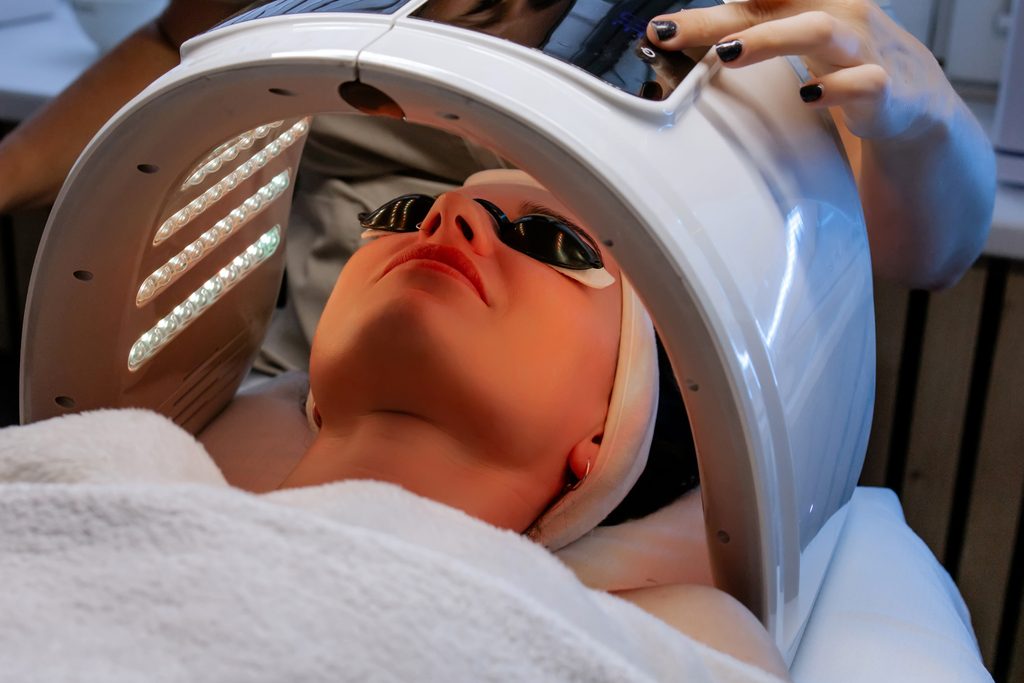
- Protect the eyes: Your provider follows the device’s eye-protection requirements and positions the equipment appropriately.
- Apply the light: You rest while the selected light runs for its programmed session.
You may notice gentle warmth, but you should not push through burning or significant discomfort. Tell your provider immediately if the treatment feels uncomfortable. Many in-office light sessions take around 20 minutes, although treatment time varies by device and protocol.
Ask whether the advertised appointment time includes consultation and other facial steps. Knowing that beforehand makes planning easier, especially when you are fitting skincare around a busy day.
What Are the Benefits of LED Light Therapy for Your Skin?
The potential benefits of LED light therapy depend on the concern and the treatment being used. Some people are interested in a smoother-looking complexion; others want additional support for acne or visible redness. Those are different goals, and they should not automatically receive the same plan.
For rejuvenation, studies of red-light devices have reported improvements in the appearance of fine lines and roughness. However, findings vary, and a treatment that helps one person may produce a smaller change for someone else. LED is best viewed as a possible addition to your skincare routine, not a promise of wrinkle-free skin.
Another practical advantage is that ordinary LED treatment is non-invasive and generally does not require a recovery period. That can make it appealing when comparing skin rejuvenation treatments with different comfort levels and downtime requirements.
Still, separate the benefits of the light from the benefits of the whole facial. Cleansing, moisturizer, and a hydrating mask have their own roles. Leaving an appointment looking refreshed does not prove that the LED portion alone caused every visible improvement.
For readers considering facial treatments for glowing skin, a useful starting point is to name one priority: fewer inflamed blemishes, softer-looking fine lines, or a treatment that complements existing care. A clear goal makes progress easier to discuss.
What Do the Different LED Light Colors Do?
Red light: Appearance and collagen support
Red light therapy for skin is often associated with rejuvenation. Research examines its effects on cells involved in maintaining the skin’s supporting structure, including processes linked to collagen production. Some systems combine red and near-infrared light, which is not visible to the eye.
That does not mean the light replaces lost collagen instantly. Think of it as a treatment whose potential changes develop over time, not a substitute for every other approach to aging skin.
Blue light: Support for certain breakouts
Blue light is used in acne-focused care because of its effects on acne-associated bacteria. It may help some inflammatory pimples, but visible-light devices do not clear every form of acne. Blackheads, whiteheads, deep cysts, and nodules require different considerations. Persistent or painful acne deserves a dermatologist’s evaluation.
Other colors: Ask what the evidence supports
Some devices offer additional colors. Rather than assuming every setting has equally strong evidence, ask what research supports the specific wavelength and goal. More settings are not a reason to use them all.
Our guide to adding LED light therapy to your facial explores how a selected wavelength can complement cleansing, hydration, and other professional services without replacing them.
What Can You Expect From LED Light Therapy?
Before committing to a treatment plan, get clear about three things: what improvement is realistic, how much time is involved, and when progress will be reviewed. Those questions matter more than the dramatic appearance of a device.
Before treatment, discuss your starting point. Bring a list of products you use and be prepared to explain your main concern. Ask whether LED is intended to address that concern directly or support another treatment.
During treatment, prioritize comfort. Speak up if the device position, brightness, or warmth feels uncomfortable. You should understand how to alert your provider and request a pause.
After treatment, follow the complete aftercare plan. LED alone generally involves little interruption to daily life. But a facial that also includes a peel or another procedure may have different restrictions. Do not assume minimal LED downtime cancels the instructions for everything else performed.
Visible improvements often require repeated use rather than one appointment, and maintenance may be needed. Studies use different devices and schedules, so there is no reliable universal promise such as “perfect skin after three sessions.”
You can make follow-up conversations more useful by choosing one or two changes to watch for. Consider occasional photographs in similar lighting instead of repeatedly checking your skin throughout the day.
Ask your provider when it makes sense to review progress and whether the plan should change if it is not helping.
Before booking, ask for a clear description of what the appointment includes.
- Is LED the entire service, or one part of a longer facial?
- Will you receive written aftercare instructions?
- Is the suggested series optional, and when will its usefulness be reassessed?
These are reasonable questions to ask.
You should feel comfortable understanding the cost, time commitment, and purpose before deciding. For a first visit, bring your questions rather than feeling you need to arrive with a complete treatment plan already figured out. That conversation belongs in the appointment.
Is LED Light Therapy Right for Everyone?
LED may suit many clients, but “gentle” does not mean appropriate in every situation. Share information about light sensitivity, medications, eye concerns, and active skin problems before beginning.
Some circumstances warrant advice from a dermatologist rather than proceeding with a cosmetic appointment.
The American Academy of Dermatology also recommends particular care when considering home red-light devices for darker skin tones because visible light can contribute to pigmentation changes in some people.
A personalized discussion is more useful than a blanket claim that every light suits every complexion.
Do not stop prescribed medication to make yourself eligible for a treatment. Ask the prescribing clinician whether the proposed light exposure is suitable.
You also do not need to choose LED just because it is available. Discuss your budget, preferences, and goals.
A provider may recommend a simpler facial, different skincare, or postponing treatment. Thoughtful care leaves room for those answers.
How to Get the Most From LED Light Therapy
A useful plan connects the treatment to your everyday habits. Start with the following priorities rather than adding more sessions or products without a reason.
Follow the schedule for the actual device. A research review on what to look for in red light therapy emphasizes that wavelength, dose, and treatment duration affect outcomes. Longer or more intense exposure is not automatically better, and protocols are not interchangeable.
Keep home care manageable. Ask which cleanser, moisturizer, and existing treatments to continue. There is no need to completely replace your new routine simply because you are adding LED. Make changes deliberately, with a clear purpose for each product.
Keep sun protection separate from light therapy. Cosmetic LED does not tan your skin or provide UV protection. Continue sunscreen and shade habits when heading outdoors. In Cape Coral, plan ahead for the walk, drive, or outdoor errands that follow your appointment rather than treating sunscreen as a beach-only product.
Choose home equipment thoughtfully. Considering a mask between professional visits? The New York Times’ article, “Should You Start Using an LED Face Mask?”, is further reading to explore. Bring any device you are considering to your consultation and ask what it would add to your current plan.
Measure usefulness, not treatment loyalty. Agree on a review point, discuss changes honestly, and ask about alternatives when needed. Choosing facial treatments for glowing skin should not become a commitment to keep buying sessions regardless of results.
The aim is a routine you understand and can maintain, with enough flexibility to respond to your skin rather than a trend.
Find an LED Light Therapy Plan That Fits Your Skin
LED Light Therapy offers a non-invasive way to explore targeted care for selected skin concerns. Red and blue light serve different purposes, and the device, treatment plan, and your individual skin all influence what is realistic.
Start with your priorities, ask questions, and give an appropriate plan time to be evaluated. You do not need every available treatment to take good care of your skin.
Great skin starts with care that makes sense for you. Curious whether LED Light Therapy belongs in your routine? Contact Glowing Results Skin Spa to explore your options and discuss your goals. We would love to help you choose a thoughtful next step, whether that includes LED or another facial better suited to your needs.
FAQs
Q: How often should you get LED light therapy?
A: Frequency depends on the device, concern, and recommended protocol. Ask your provider how often to attend, when to review progress, and whether maintenance is appropriate. Consistency matters, but adding extra sessions is not a shortcut.
Q: Does LED light therapy hurt or require downtime?
A: Standalone LED is usually comfortable and requires little to no downtime. Gentle warmth is possible, but burning or significant discomfort should be reported immediately. Aftercare may differ when your appointment includes other treatments.
Q: Can LED light therapy be combined with other facial treatments?
A: Often, yes. LED may complement selected facial services, but timing and compatibility should be planned professionally. Ask which steps are included, what each contributes, and what aftercare applies to the entire appointment.
Q: How is LED light therapy different from red light therapy?
A: LED describes the light source; red describes a wavelength. Many red-light treatments use LEDs, while some use low-level lasers. LED skincare devices may also use blue light or other wavelengths for different treatment goals.