
A good skincare routine is an important part of caring for your skin. Still, you might cleanse, moisturize, and use sunscreen regularly while noticing rough texture, clogged pores, or dryness you’d like help understanding.
Does that mean your products aren’t working? Would a facial add something useful? And where do professional skin treatments fit into what you already do?
The answer depends on the concern and the kind of care you need.
Everyday products and professional appointments can serve different purposes, with some overlap between them. Your home routine provides regular care, while a suitable treatment can offer focused attention to a particular cosmetic goal.
Neither needs to become complicated.
Understanding the difference can help you decide what to keep doing at home, what to ask about during a consultation, and when a concern needs medical care. Let’s look at how these options fit together so you can choose your next step with more confidence.
Everyday Skincare vs. Professional Skin Treatments
Everyday skincare usually means the habits and products you use regularly: cleansing, moisturizing, sun protection, and optional steps selected for your needs.
Professional skin treatments are services performed by a trained provider. In a spa, that may include a customized facial, selected exfoliation, or hydration-focused care.
These services can address cosmetic concerns such as dullness, some clogged pores, and uneven surface texture. The approach should reflect your skin’s condition and tolerance.
There is also an important distinction between esthetic services and medical dermatology.
Perri Dermatology explains that dermatology involves diagnosing and treating skin conditions. Estheticians provide cosmetic services within their training and scope; persistent acne, eczema, unexplained rashes, and suspicious skin changes belong with a dermatologist.
Where care happens doesn’t tell you everything about its purpose, either. A prescription cream or an over-the-counter acne medication used at home is still a treatment.
For this article, “professional skin treatments” refers primarily to services you receive during an appointment. Those services can complement your daily routine, while medical care remains a separate consideration when needed.
What Does a Basic At Home Skincare Routine Look Like?
A manageable home routine starts with a few dependable steps.
Gentle cleansing
Use a suitable cleanser to remove makeup, sunscreen, oil, and daily buildup. Apply it gently with your fingertips, rinse with lukewarm water, and pat dry.
Your skin should feel comfortable afterward. Painful tightness or a squeaky finish isn’t a requirement for clean skin.
Moisturizing
Choose a moisturizer that suits how your skin feels. A richer cream may be comfortable for dry areas, while a lighter lotion or gel may suit someone who dislikes heavier textures.
Oily skin can still need moisture. Combination skin may need different amounts in different areas.
Daily sun protection
Apply broad-spectrum SPF 30 or higher to exposed skin before going outdoors. Reapply approximately every two hours outdoors and after swimming or sweating, following the product directions.
In Southwest Florida, outdoor lunches, walks, and errands can involve sun exposure even when you aren’t planning a beach day.
Dry, oily, combination, and sensitive skin may share these basic steps while needing different formulations. Choose products around your own comfort and concerns.
Additional steps should have a clear purpose.
Exfoliation may suit some people, but it isn’t required for everyone. Using an exfoliating cleanser, acid toner, and scrub together can create more exposure than you intended.
Introduce new products gradually so you can tell how your skin responds. Follow separate instructions for medications and avoid changing prescribed care without advice from the clinician who prescribed it.
A simple routine you understand can support everyday skin health without filling every shelf. It also gives your esthetician a clearer starting point when discussing whether an appointment would add useful support.
What Can Professional Skin Treatments Actually Do for Your Skin?
Professional treatments create an opportunity to focus on your skin at a particular moment.
An esthetician can ask about your routine, observe its cosmetic appearance, discuss what you want to improve, and choose appropriate steps. That attention helps connect a service with a goal.
Someone who wants help with dry-feeling skin may need a different approach from someone concerned about blackheads. Two clients requesting a “refreshing facial” may therefore receive different recommendations.
Depending on the service, potential benefits of facials include:
- Improved hydration and a temporarily more supple appearance
- Smoother-looking surface texture through suitable exfoliation
- Removal of selected blackheads or other congestion through appropriate extractions
- Time to relax and ask questions about cosmetic skincare
Not every facial includes every step.
Extractions may be inappropriate for some areas, and skin that is already irritated may not be ready for exfoliation. Matching the service to your current condition matters more than including as many techniques as possible.
It also helps to understand what a treatment can reasonably change.
A hydration-focused service may improve how skin feels without correcting persistent discoloration. Removing some blackheads won’t necessarily resolve recurring acne. A smoother appearance after exfoliation doesn’t mean the same service should be repeated more aggressively.
Results vary with the treatment, the concern, your skin’s response, and the care you follow afterward.
Some changes may be temporary. Other cosmetic goals may require a longer plan or a different type of professional.
The appointment can also improve your understanding of home care. You might discover that several products serve the same purpose or leave with clearer instructions about a step you’ve been using inconsistently.
That guidance can be useful even when the adjustment is small.
Before choosing a service, ask what result it is intended to provide, how progress will be reviewed, and what limitations you should expect. Professional skincare should give you a reason for the recommendation and room to ask questions.
Different Types of Professional Facial Treatments
Facial names describe broad categories, and the details can vary between providers.
Our guide to different types of facials and how to choose a treatment for your skin offers a closer look at the options. For a starting point, here’s how several common services differ.
Hydrating facials
These usually emphasize moisturizing products, serums, or masks selected to improve hydration and comfort.
They may appeal when skin feels dry or looks less plump. Ask what is included, especially if you react easily to fragrance or unfamiliar ingredients.
A hydrating facial can complement moisturizer use at home. Its effects still depend on the products, your response, and what is causing the dryness.
Acne-focused or congestion-focused facials
These may include gentle cleansing, suitable exfoliation, and extractions when appropriate.
They can offer cosmetic care for certain clogged pores. An esthetician should avoid treating every bump as something to extract.
Painful, persistent, or scarring acne needs medical guidance, and a facial shouldn’t replace an acne treatment plan.
Anti-aging facials
This is a broad label rather than one standardized procedure.
A service may use hydration or selected exfoliation to improve the appearance of fine lines, dullness, or texture. Ask which techniques are involved and what each is expected to accomplish.
The name alone doesn’t establish that a facial will improve firmness or produce lasting collagen changes. Realistic expectations should be tied to the actual service.
Dermaplaning
Professional dermaplaning uses a blade to remove superficial dead skin cells and fine facial hair, often called peach fuzz.
It may leave the surface feeling smoother, but it isn’t appropriate for every skin condition. Active breakouts, irritation, and other factors can affect suitability.
Fine hair grows back, so hair removal is temporary. The technique requires care, and an at-home facial razor should not be assumed to provide the same assessment or procedure as a professional service.
Chemical peels
A chemical peel uses an exfoliating solution to produce controlled changes in the skin. Depending on its type and depth, it may address selected concerns involving texture, discoloration, or fine lines.
Peels vary considerably. Stronger or deeper procedures may require a medical setting, and recovery needs are not the same for every peel.
Discuss your skin tone, sensitivities, medications, and previous reactions before considering one. Proper selection and aftercare matter, including precautions around sun exposure.
These categories can overlap, but you don’t need to combine them all. The appropriate choice depends on what you want to address and what your skin can tolerate.
How to Combine At Home Skincare With Professional Treatments
Begin with a shared goal.
Instead of asking for “better skin” in general, describe what would make a difference to you. That might mean less tightness after washing, fewer visible blackheads, or help understanding an uneven surface texture.
Then review what you already do.
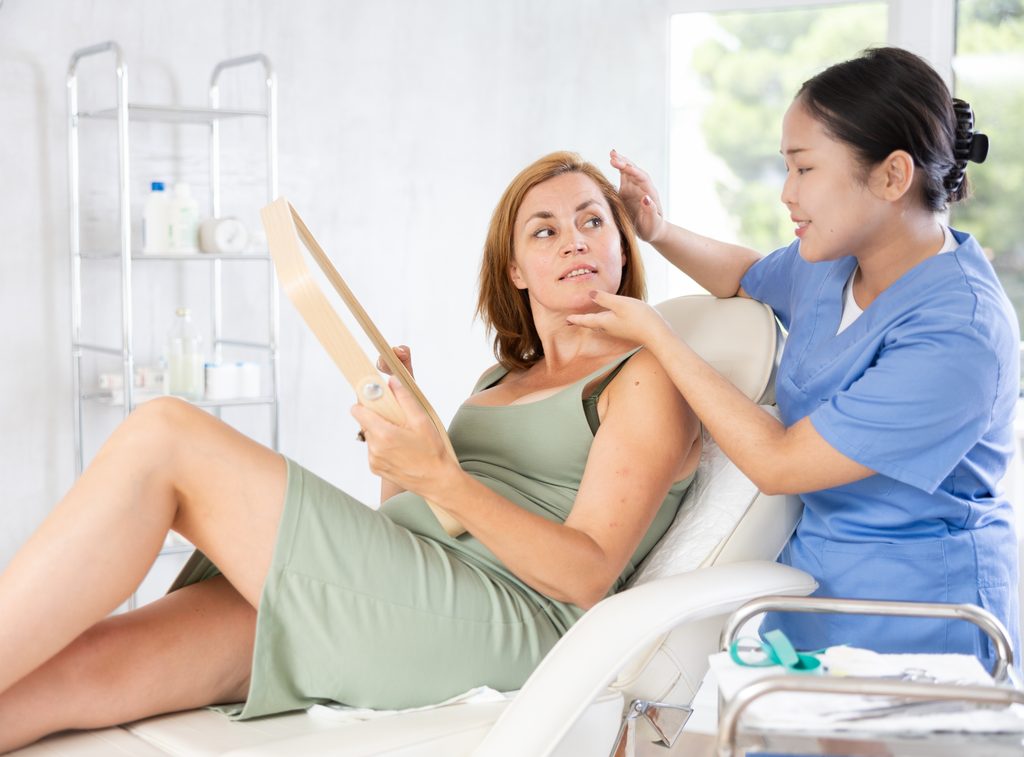
A useful plan should account for your current cleanser, moisturizer, sunscreen, treatment products, and previous experiences. Comfortable products that serve their purpose may remain part of it.
Drugstore skincare can be effective for everyday care. There is no automatic requirement to replace it with a professional product line before receiving a facial.
Certain professionally recommended products may offer formulations suited to a particular goal. What matters is why that formula is a reasonable match for your skin.
Consider more than the label:
- Ingredients: What is the product intended to do?
- Concentration: Is the amount appropriate, and can your skin tolerate it?
- Formulation: How do the ingredients work together in the finished product?
- Stability and storage: Will the product remain suitable when stored and used as directed?
- Practicality: Can you use it comfortably and afford to keep it in your routine?
A higher concentration isn’t automatically a better choice. More expensive packaging or a “medical-grade” label doesn’t establish that a product will suit everyone.
Our comparison of medical-grade skincare and drugstore skincare explores those considerations in more detail.
Next, coordinate the treatment with your home routine.
Tell your provider about exfoliating acids, retinoids, prescription products, and anything that has recently caused discomfort. These details can affect preparation and aftercare.
Ask for clear instructions about what to use before and after the appointment. Follow treatment-specific guidance, and coordinate changes to prescribed products with your prescribing clinician.
In Cape Coral, it’s also worth discussing your calendar. Boating, swimming, outdoor work, or an upcoming beach trip may affect whether a particular service fits your plans.
Ask for aftercare instructions you can refer to at home. They should explain which products to use, any temporary restrictions, when to resume optional steps, and whom to contact if you have an unexpected reaction.
Give yourself room to follow those instructions. If you’re considering an unfamiliar service before a wedding or another important event, discuss the timing beforehand. Recovery needs vary, and you may want time to understand how your skin responds.
If a series is recommended, ask about the total time and cost involved, including any suggested home products.
Knowing those details helps you decide whether the plan is manageable. You can discuss alternatives or begin with a consultation before committing to multiple appointments.
Finally, agree on how to review the outcome.
Notice comfort, tolerance, and the concern you originally wanted to address. If a treatment isn’t meeting that goal, say so rather than assuming you need to book it more often.
A plan can evolve. Daily care, occasional services, and medical input can be adjusted around what your skin needs.
When Should You Consider Professional Skincare Guidance?
You may benefit from guidance when you want a clearer explanation of your options.
Perhaps your moisturizer never seems comfortable, blackheads keep tempting you to squeeze, or you’re unsure whether a facial could help with texture. Those are reasonable topics for a consultation.
You can also ask for help before changing a routine that has become crowded with products.
Constantly switching formulas or following every new trend makes it difficult to know what your skin tolerates. A review may help identify overlap and establish a simpler plan.
At Glowing Results Skin Spa, discussing your concerns, current routine, and goals helps make that conversation practical. You don’t need to know spa terminology or choose a service in advance.
Bring product names or clear photos of labels, including occasional masks, scrubs, and spot treatments.
Useful questions include:
- Which parts of my routine should I keep?
- What would this treatment add?
- Is my skin ready for it?
- What preparation or aftercare is required?
- When should we reassess the plan?
Guidance is particularly valuable before more intensive exfoliation.
Ohio State’s overview explains how procedures such as dermaplaning and chemical peels involve training, technique, and individualized assessment.
A short video can make a procedure look straightforward while leaving out important decisions about suitability and application. Strong peel solutions, in particular, should not be treated like ordinary daily skincare products.
Seek a qualified provider rather than attempting professional-intensity procedures without appropriate training and supervision.
There are also concerns that should go directly to a dermatologist.
Persistent rashes, unusual or changing moles, painful or scarring acne, and unexplained symptoms need medical evaluation. Ongoing dryness accompanied by significant itching, cracking, or pain may also require more than cosmetic care.
A consultation should help identify an appropriate next step, including referral when needed. You shouldn’t feel that booking a treatment is the only acceptable outcome.
For cosmetic goals, professional guidance can help you choose thoughtfully. For symptoms that need diagnosis, medical care provides a different and necessary kind of support.
Find Skin Treatments That Work With Your Everyday Routine
Your everyday skincare routine provides care you can repeat: gentle cleansing, suitable moisture, sun protection, and any targeted products selected for your needs.
Professional skin treatments can add focused cosmetic care, an opportunity to review your routine, and guidance about services that may fit a particular goal.
The useful question is what you want to improve and which approach is suited to that concern.
Keep the products that work comfortably for you. Ask what a recommended treatment can realistically accomplish, understand its aftercare, and leave room to reassess how your skin responds.
You don’t need every trend or a larger collection to make an informed choice.
Want help connecting your daily skincare with the right professional care? Contact Glowing Results Skin Spa to discuss your routine and explore skin treatments that fit your goals. We’ll talk through your concerns, preferences, and current products to help you choose a practical next step.
FAQs
Q: What is the difference between skincare and skin treatments?
A: Everyday skincare usually refers to habits and products such as cleansing, moisturizing, and sun protection. Professional skin treatments are appointment-based services selected for particular concerns. The terms can overlap: medications used at home are treatments, too. Cosmetic esthetic services and medical dermatology also have different roles.
Q: Are professional skin treatments better than at-home skincare?
A: Their value depends on the concern. Daily products can provide effective care, including prescribed or over-the-counter treatments when appropriate. A professional service may add suitable exfoliation, hydration, or attention to certain clogged pores. You don’t automatically need appointments if your routine meets your needs and your skin feels comfortable.
Q: How often should I get a professional facial?
A: Frequency depends on your goals, skin tolerance, the service, and practical considerations such as budget and outdoor plans. Some people choose occasional visits; others may consider a planned series. Ask why a proposed schedule suits you and when the results should be reviewed, rather than assuming everyone needs monthly facials.
Q: Can I continue my normal skincare routine after a facial?
A: It depends on the treatment. You may need temporary changes to exfoliants, retinoids, or other products, so get specific instructions before leaving. Ask what to use, what to pause, and when to resume it. Coordinate any change to prescribed skincare with the clinician who prescribed it.