
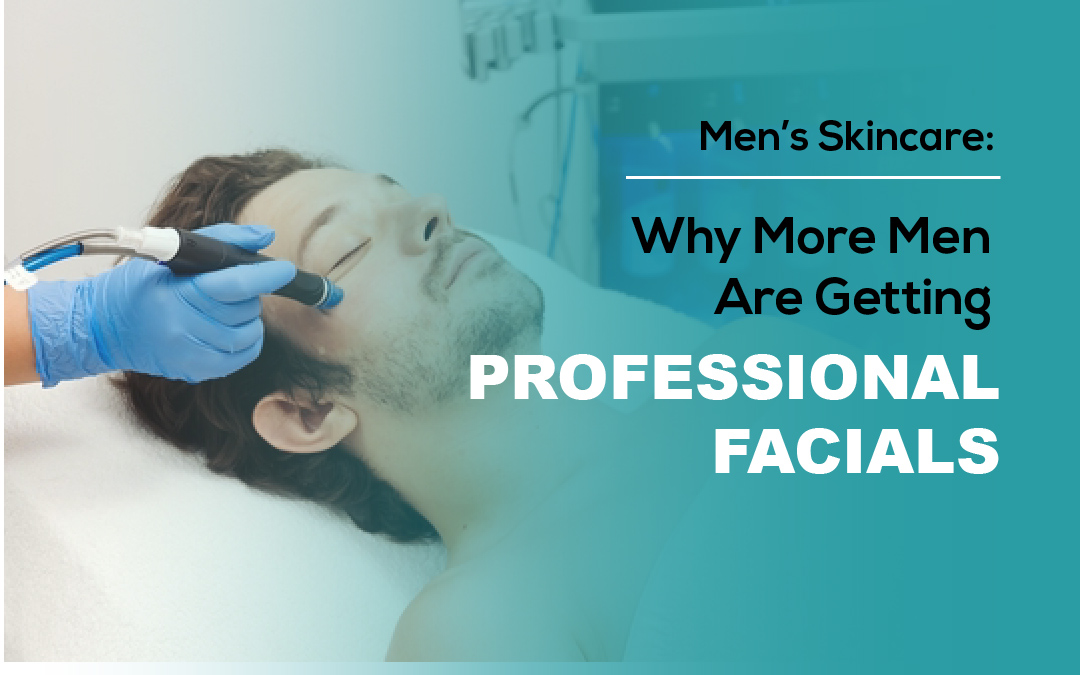
Skincare isn’t just for women. Men can benefit from taking care of their skin too, and it doesn’t have to involve a complicated routine or a bathroom shelf packed with products.
For many men, skincare becomes more important when a specific problem starts getting annoying. Maybe shaving leaves your neck irritated. Perhaps breakouts keep appearing around your jawline. Your skin might feel oily by lunch but dry after washing, or you may simply be noticing that your complexion looks rougher or more tired than it used to.
Those are all valid reasons to pay more attention to your skin.
A straightforward routine at home can take care of many everyday needs, but professional facials can add a more focused layer of care when you want help understanding or improving a specific concern.
They can also make skincare feel easier by helping you figure out what your skin actually needs instead of guessing your way through product after product.
In this guide, we’ll break down why more men are paying attention to skincare, what professional facials actually involve, and how they can complement a practical routine without making your life more complicated.
Why More Men Are Paying Attention to Their Skin
Good skincare for men doesn’t require following every new trend or learning the difference between fifteen types of boutique skin products.
At its most basic level, skincare is simply taking care of an organ that deals with a lot every day.
Think about everything your skin may experience in a typical week:
- Shaving
- Sweat
- Oil
- Sunscreen
- Outdoor heat
- Air conditioning
- Stress
- Lack of sleep
- Facial hair products
- Dry weather
- Sun exposure (without sunscreen)
All of those factors can influence how your skin looks and feels.
Shaving alone can create a cycle of irritation for some men. Repeated friction may contribute to redness, razor bumps, ingrown hairs, or sensitivity around the neck or jawline. Men who work outdoors or spend a lot of time exercising may also notice more sweat, oil, and buildup.
According to Cleveland Clinic’s guide to skin care for men, men benefit from the same basic skincare principles as everyone else: understand your skin type, cleanse appropriately, moisturize, and protect your skin from the sun.
That doesn’t mean your routine has to look exactly like someone else’s.
The goal is healthy-looking, comfortable skin– not meeting some unrealistic appearance standard.
A skincare routine can be practical self-care in the same way that stretching, exercise, dental care, or eating well are. You are simply taking care of your body.
Common Skin Concerns Men Deal With
One reason skincare for men has become more mainstream is that more men are recognizing that common skin concerns are manageable rather than something they simply have to tolerate.
Some of the most common issues include:
- Clogged pores
- Blackheads
- Breakouts
- Excess oil
- Dryness
- Razor irritation
- Ingrown hairs
- Sensitive skin
- Uneven-looking texture
- Dark spots left behind by breakouts
- Dullness
- Early signs of aging
Everyone’s skin is different, so there is no single “best men’s routine.”
Someone with oily skin may need lightweight hydration and careful cleansing. Someone dealing with dry, tight skin may need a gentler cleanser and richer moisturizer. Another person may have persistent breakouts that require an appropriate acne treatment rather than simply washing their face more often.
Understanding your own skin concerns makes it easier to choose products with a purpose.
For example, repeatedly scrubbing oily skin may seem logical, but harsh cleansing can leave skin irritated and uncomfortable. Similarly, using a heavy product because someone online recommended it may not make sense for acne-prone skin.
Byrdie’s dermatologist-informed men’s skincare guide also emphasizes matching skincare to individual skin type and concerns rather than treating men’s skin as one uniform category.
A simple question can help:
What is the one thing about your skin you actually want to improve?
Start there.
What Makes a Professional Facial Different?
Most people can cleanse and moisturize at home. So what does a facial add?
A professional facial gives your skin more focused attention in a controlled environment. Instead of choosing a treatment based on whatever product looks appealing at the store, an esthetician evaluates your skin and adjusts the service around what they see.
Depending on the facial and your goals, professional facials may include:
- Professional cleansing
- Gentle exfoliation
- Steam when appropriate
- Extractions
- Hydrating serums
- Customized masks
- Facial massage
- Moisturizer
- Sunscreen
- Other targeted treatment steps
Not every person receives every step.
That is part of what makes professional care useful.
A person with highly sensitive skin may need less exfoliation. Someone with congestion may benefit from carefully performed extractions. Someone dealing with dryness may receive more hydration-focused care.
Men’s Health’s article on why men get facials points to practical benefits such as professional cleansing, exfoliation, and extractions, particularly for people who struggle with congestion or shaving-related concerns.
The appointment can also provide something your bathroom routine cannot: a trained professional’s perspective.
You may think your skin is simply “dry” when it is actually dehydrated. You may assume every bump is acne when shaving irritation is contributing. Or you may be using several products that do the same job without realizing it.
A professional facial creates an opportunity to ask questions and simplify.
Your Facial Can Be Tailored to Your Skin
Professional skincare should not be a one-size-fits-all experience.
Even two men with the same basic skin type may need completely different treatments.
Consider these examples:
Client A:
Has oily skin, exercises daily, and struggles with clogged pores around the nose and forehead.
Client B:
Also has oily skin but shaves every morning and experiences persistent redness and razor irritation.
Both may describe themselves as having “oily skin,” but their treatment needs can still be very different.
The same is true for dryness.
One person may simply need more moisture, while another may have a compromised skin barrier that requires a very gentle approach.
Facial treatments for men can be customized around:
- Current skin condition
- Sensitivity
- Breakouts
- Congestion
- Dryness
- Shaving habits
- Lifestyle
- Sun exposure
- Current skincare products
- Individual goals
Personalization also reduces the temptation to solve every concern by buying something new.
If you want a closer look at how professional care can complement what you already do at home, read our guide on why your at-home skincare routine isn’t always enough.
The goal is not to convince you that home skincare is useless. It’s actually the opposite.
Professional guidance should make your home routine clearer and easier to maintain.
What Your First Professional Facial May Be Like
If you have never had a facial, the unfamiliarity can make the whole idea sound more complicated than it is.
You do not need to know spa terminology before booking.
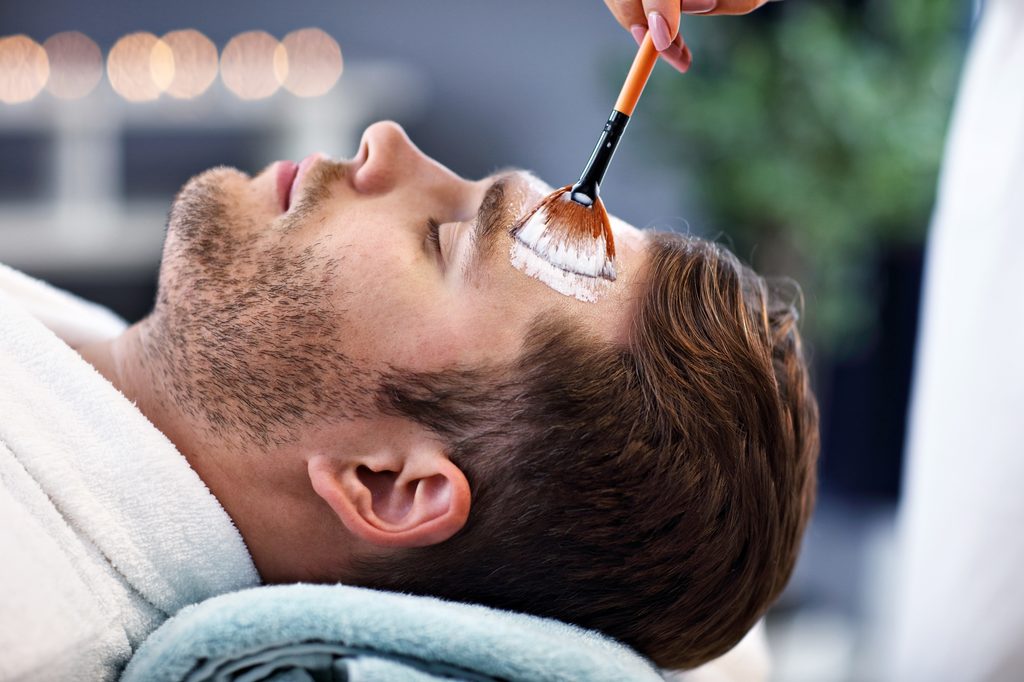
Your appointment should begin with a conversation about your skin.
You may be asked about:
- Your current routine
- How often you shave
- Products you use
- Allergies or sensitivities
- Breakouts
- Dryness
- Medications
- Previous reactions
- Your main skincare goal
Be honest.
If your current routine is “soap in the shower and nothing else,” say so. That gives your esthetician useful information.
There is no prize for pretending you already know everything about skincare.
During the facial, your esthetician should explain what is being used and why. If something stings, burns, or feels uncomfortable, speak up.
Professional skincare is not supposed to be an endurance challenge.
Afterward, you may receive simple product or routine recommendations based on how your skin responded.
A good appointment should leave you feeling more informed– not pressured into buying an entirely new regimen.
How Professional Facials Can Fit Into a Men’s Skincare Routine
Think of your men’s skincare routine as the daily maintenance plan and professional facials as occasional, more focused support.
Your home routine is what happens every day. A facial happens from time to time. Neither one replaces the other.
At home, you might focus on:
- Removing sweat and buildup
- Maintaining hydration
- Managing an appropriate treatment product
- Protecting your skin from UV exposure
During a professional visit, the focus can shift toward:
- Evaluating how your skin is doing
- Deepening hydration
- Safely addressing congestion
- Adjusting your routine
- Improving comfort or texture
- Selecting products more intentionally
This can be particularly helpful if your skin changes with weather, stress, exercise, or shaving habits.
You also don’t have to wait until something “goes wrong” to seek professional care.
Some men schedule facials because they enjoy the experience and want regular skincare maintenance. Others come in when they have a specific issue.
Both are reasonable. The right schedule depends on you.
Consistency Matters More Than Product Collecting
One of the easiest traps in skincare is believing the next product will fix everything.
You buy a cleanser. Then a scrub. Then a serum. Then yet another serum because someone on social media said the first ingredient is outdated. Eventually, you have a dozen products and no idea what any of them are actually doing.
Consistency is far more useful.
Our guide to the power of consistency in your skincare routine explains why giving your skin time to respond makes it easier to understand what works.
This matters for men who are just getting started. You do not need to become a skincare expert overnight. Start with a few habits you can actually maintain.
Keep Your At-Home Routine Simple
A practical men’s skincare routine can begin with three foundational steps:
1. Cleanse
- Use a gentle cleanser to remove oil, sweat, sunscreen, and other daily buildup.
- If your face feels painfully tight after washing, your cleanser may be too harsh.
- More scrubbing does not automatically mean cleaner skin.
2. Moisturize
- Moisturizer helps keep skin hydrated and supports the skin barrier.
- Oily skin still needs hydration. The difference? You may prefer a lightweight moisturizer rather than a rich cream.
- Dry skin may need something more nourishing.
- Choose based on your skin, not whether the bottle is marketed specifically toward men.
3. Protect Your Skin From the Sun
- Daily sunscreen is one of the most useful skincare habits you can build.
- Choose broad-spectrum SPF 30 or higher and apply it to exposed skin.
- This matters whether your goal is maintaining healthy skin, reducing dark spots, or preventing premature visible aging.
- In Florida especially, sunscreen should not be treated as something reserved for the beach.
Where Does Shaving Fit?
Shaving is part of skincare because it directly affects the skin.
Helpful habits include:
- Shave after warming and softening facial hair
- Use appropriate shaving cream or gel
- Avoid repeatedly scraping the same spot
- Use a clean, sharp razor
- Moisturize afterward if your skin tolerates it
- Avoid strong alcohol-heavy products if they leave your skin burning
If razor bumps are a recurring problem, ask a professional whether your shaving technique or products may be contributing.
Do You Need Toner, Serum, Eye Cream, or Exfoliation?
Maybe, but not automatically. Start with your goal.
A serum makes sense when it contains an ingredient relevant to something you want to improve.
Exfoliation may help certain concerns, but using it too frequently can cause irritation.
An eye cream is optional for many people. And toner is not mandatory. Skincare becomes much easier when you stop treating every category as a required step.
When Professional Skincare May Be Especially Helpful
Professional care can be particularly useful when you have been trying to solve the same issue for months without understanding why it continues.
Consider getting guidance if you are dealing with:
Persistent Breakouts
Occasional pimples are common, but persistent or worsening acne deserves a more intentional approach.
Some professional facials may help with congestion and surface buildup, but moderate or severe acne may require an evaluation by dermatologist and medical treatment.
A spa facial is not a replacement for appropriate medical care.
Recurring Congestion
Blackheads and clogged pores can become tempting to squeeze at home.
Professional extractions, when appropriate, provide a more controlled option and may reduce the risk of damage caused by aggressive picking.
Chronic Dryness
If moisturizer never seems to help, your routine may need another look.
Harsh cleansing, hot water, over-exfoliation, weather, shaving, or product selection may all contribute.
Razor Irritation
Shaving-related redness and bumps may benefit from adjustments to your shaving routine and products.
Your esthetician can help evaluate whether skin sensitivity, congestion, or other factors appear to be involved.
Skin That Simply Feels “Off”
You do not need a dramatic problem to ask for help. Maybe your skin feels rougher,looks dull or uneven or, you simply want to start taking better care of it but have no idea where to begin. That’s enough of a reason for a consultation.
Facials Are Also a Form of Practical Self-Care
There is another benefit worth mentioning: relaxation.
Men do not need to justify self-care by turning every spa appointment into a performance optimization strategy.
A facial can simply feel good.
You spend part of the appointment away from your phone, work, traffic, and whatever else has been demanding your attention.
You get to slow down while someone else takes care of something for you.
That matters.
Stress affects more than your mood, and creating space to relax can be valuable even if the facial is not correcting a major skin concern.
Professional skincare can be results-focused and enjoyable at the same time.
The two ideas are not in conflict.
What Men Should Look for When Booking a Facial
If you are booking your first appointment, you do not need to look specifically for a facial with the word “men” in the title.
Instead, look for a provider who customizes treatments to your skin.
Before booking, consider asking:
- Will my skin be evaluated before treatment?
- Can the facial be adjusted for sensitivity?
- Are extractions included if appropriate?
- What products are used?
- How long is the appointment?
- Is there any downtime?
- What should I avoid before or after treatment?
- Can you help me simplify my home routine?
You should also mention medications, allergies, recent procedures, and prescription skincare products.
That information can influence what is safe to use during your treatment.
The best facial treatments for men are not necessarily treatments designed around stereotypes about men’s skin.
They are treatments selected thoughtfully for the individual sitting in the chair.
Make Men’s Skincare Work for Your Actual Life
Skincare is easier to maintain when it fits your routine rather than fighting against it.
If you:
- Exercise before work– keep your cleanser somewhere convenient.
- Forget sunscreen– put it beside something you use every morning.
- Hate complicated routines– keep it simple.
- Travel frequently– choose a few reliable products that are easy to pack.
Practical skincare beats aspirational skincare every time.
The goal is not to become someone who loves spending twenty minutes at the bathroom mirror if that is not your personality.
The goal is to make taking care of your skin simple enough that you will actually do it.
Professional Facials Can Keep Men’s Skincare Straightforward
Taking care of your skin does not need to become another complicated responsibility.
A simple routine can cover your everyday needs, while professional facials can provide personalized support when you want help with congestion, dryness, breakouts, shaving irritation, texture, or simply understanding your skin better.
You do not need perfect skin. You do not need every trending product. And you certainly do not need to know all the answers before walking into a spa.
You just need a starting point.
Curious What a Professional Facial Could Do for Your Skin?
If you have been thinking about professional skincare but aren’t sure where to begin, Glowing Results Skin Spa can help you find a treatment that fits your goals and your skin– not somebody else’s routine.
Come in with your questions, your current products, or no routine at all. We’ll help you make skincare feel more practical, personalized, and manageable.
FAQs
Q: Are professional facials good for men?
A: Yes. Professional facials can be helpful for men who want more focused care for concerns like congestion, dryness, breakouts, or uneven texture. The most useful facial is one customized to your individual skin rather than chosen simply because it’s marketed toward men.
Q: How often should men get a facial?
A: There is no single schedule that works for everyone. How often you book a facial depends on your skin, goals, treatment type, budget, and how your complexion responds. An esthetician can help you decide whether occasional or more regular appointments make sense.
Q: Do I still need a skincare routine if I get professional facials?
A: Yes. Facials complement your everyday routine rather than replace it. Gentle cleansing, moisturizing, and sun protection help care for your skin between professional treatments and support the results of your appointments.
Q: Can a facial help with acne and clogged pores?
A: Certain professional facials may help remove surface buildup, address some clogged pores through appropriate extractions, and support acne-prone skin. Persistent, painful, or scarring acne may require medical treatment from a dermatologist, so the right approach depends on the type and severity of your breakouts.