
Cleansing and hydrating your skin can go a long way, but sometimes you might want a little more from a professional facial.
Maybe your complexion looks tired, your facial contours feel less defined than they once did, or you’re simply curious about treatments that focus on toning as well as skincare.
That’s where a microcurrent facial comes in.
This non-invasive treatment uses very low levels of electrical current across the face as part of a professional facial experience. It has become especially popular with clients interested in facial sculpting and a temporarily lifted, refreshed-looking appearance.
But does it actually lift your face? And what should you realistically expect?
In this guide, we’ll break down the most talked-about microcurrent facial benefits, how the treatment works, what it can and cannot do, and how to decide whether it makes sense for your skincare goals.
What Is a Microcurrent Facial?
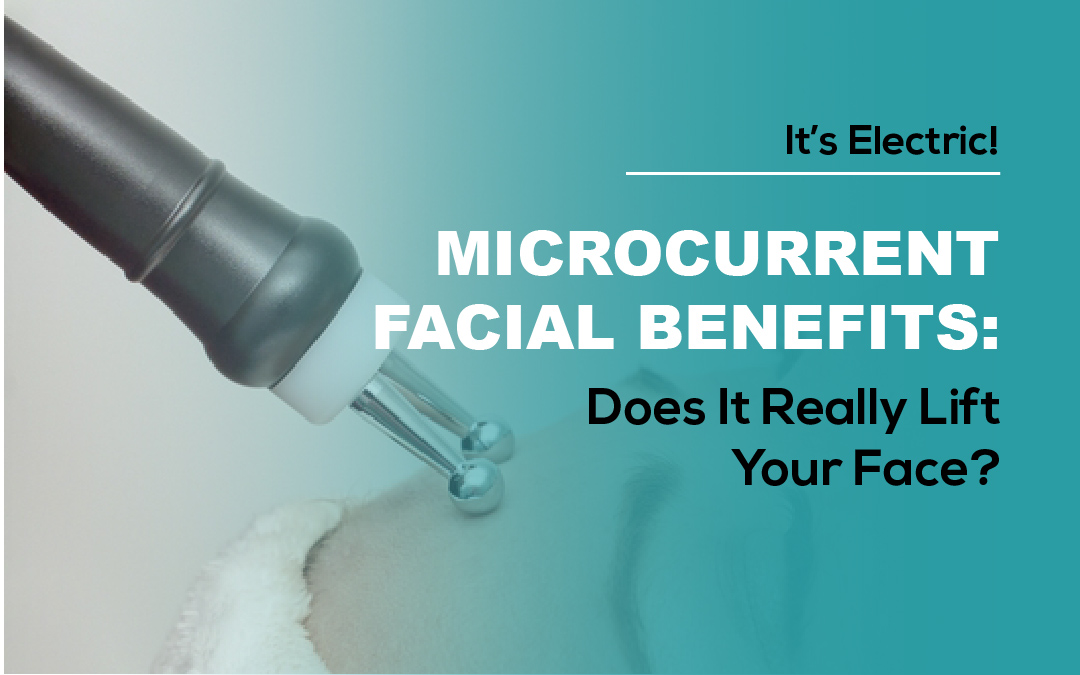
A microcurrent facial is a cosmetic treatment that uses a handheld device to deliver extremely low levels of electrical current to the skin and facial muscles.
The treatment does not involve incisions, injections, or intentional injuring the skin. Instead, specialized probes or tools are moved across different areas of the face while a conductive gel or compatible skincare product helps them glide smoothly.
Medical News Today’s overview of microcurrent facials describes the treatment as using tiny electrical currents to stimulate facial skin and muscles with the goal of improving the face’s appearance.
During a professional appointment, microcurrent may be paired with more traditional facial steps such as:
- Cleansing
- Hydration
- Serums
- Masks
- Facial massage
- Moisturizer
- Sun protection
That combination is part of what makes the treatment appealing.
You are not necessarily choosing between a traditional facial and facial toning. A professional microcurrent facial can incorporate both, depending on the service and your skin’s needs.
The treatment is often used around areas such as:
- Cheeks
- Jawline
- Forehead
- Brows
- Lower face
The overall goal is typically to give the face a more refreshed, defined, and toned appearance rather than permanently changing its structure.
How Does Microcurrent Work on the Face?
Microcurrent devices deliver low-level electrical stimulation through specialized tools placed against the skin.
You may hear the treatment casually described as a “workout for your face.” That comparison can help explain the idea behind facial-muscle stimulation, but it should not be taken too literally.
The current is gently applied along different facial areas, often following the natural contours of the cheeks, jawline, forehead, and brows.
For someone interested in facial sculpting, an esthetician may spend more time working along the jawline or cheek area to emphasize a more defined-looking contour.
Some clients report seeing a temporarily more lifted appearance immediately after treatment. However, research on cosmetic microcurrent facials remains limited, especially when it comes to proving dramatic or permanent lifting.
Medical News Today notes that microcurrent stimulation may influence facial muscles and circulation, but it also emphasizes that there is relatively little evidence establishing how effective or reliable cosmetic microcurrent facials are over the long term.
That distinction is important.
A microcurrent facial lift does not mean your skin or underlying facial tissues have been permanently repositioned.
It is better understood as a temporary cosmetic effect that may make certain areas look more toned, sculpted, or refreshed.
What Are the Benefits of a Microcurrent Facial?
The appeal of microcurrent comes from the fact that it can add a sculpting-focused element to a professional facial without requiring injections or surgery.
Potential microcurrent facial benefits may include:
- A temporarily more lifted-looking appearance
- Enhanced facial definition
- A refreshed complexion
- Facial muscle stimulation
- A more toned-looking jawline or cheek area
- A non-invasive treatment experience
- The ability to combine facial toning with other skincare steps
Microcurrent is sometimes discussed as part of anti-aging treatments because clients frequently pursue it for changes associated with aging, such as less visible definition or reduced facial firmness.
However, expectations should stay grounded.
Facial Sculpting Without Structural Change
One of the most noticeable reasons people choose microcurrent is facial sculpting.
After a session, certain areas may appear:
- More defined
- More awake
- Less tired
- Temporarily lifted
- Slightly firmer-looking
That can make microcurrent appealing before an event or as part of an ongoing professional skincare plan.
What it cannot do is permanently alter your bone structure or create the same result as cosmetic surgery.
A Refreshed, Radiant Appearance
A professional microcurrent facial usually involves more than electrical stimulation alone.
Cleansing, hydration, masks, serums, and massage may all influence how fresh your skin looks afterward.
This means some of the immediate glow you notice may come from the overall facial– not exclusively from the microcurrent device.
That is actually a benefit of combining these techniques. Your appointment can focus on both skincare and visible facial toning.
What About Collagen?
You may see microcurrent marketed as a treatment that “boosts collagen.”
That claim deserves some context.
Microcurrent electrical stimulation has been researched in areas such as wound healing and circulation, and some aesthetic sources discuss possible effects related to collagen support. However, Medical News Today notes that studies have not yet confirmed that cosmetic microcurrent facials stimulate collagen production in the way they are often advertised.
So, rather than treating microcurrent as a proven collagen-building procedure, it is more accurate to focus on the cosmetic benefits clients are more likely to notice: temporary toning, facial definition, and an overall refreshed appearance.
If collagen stimulation is one of your primary skincare goals, talk with your esthetician about treatments specifically selected for that purpose rather than assuming microcurrent is the only– or strongest– option.
Does a Microcurrent Facial Really Lift Your Face?
This is probably the biggest question surrounding microcurrent.
The short answer is: it may create the appearance of a temporary lift, but it is not the same thing as permanently lifting facial tissue.
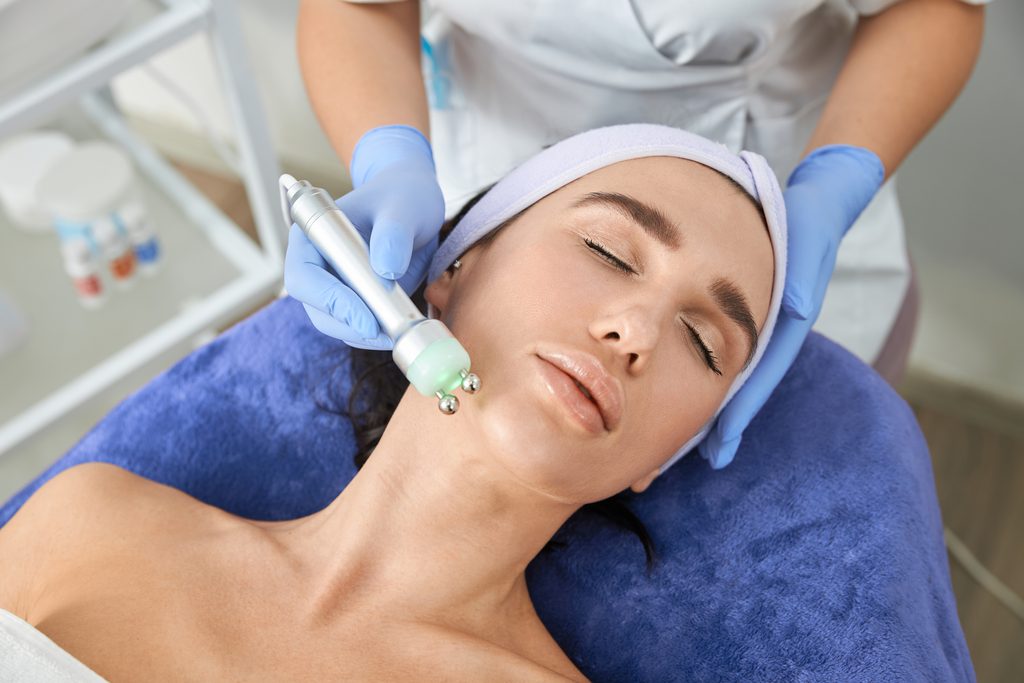
Some people notice more definition around the cheeks, brows, or jawline after treatment. The effect can make the face look slightly more sculpted or refreshed.
But results vary.
Factors that may influence what you notice include:
- Your natural facial structure
- Age
- Muscle tone
- Skin condition
- Treatment settings
- The device being used
- Treatment frequency
- Your overall skincare routine
A microcurrent facial also does not produce the same type of result as a surgical facelift.
Surgery physically repositions tissues and can create long-lasting structural changes. Microcurrent is non-invasive and works externally through low-level electrical stimulation.
That makes it appealing because it is less intensive– but it also means expectations should be different.
Think of a microcurrent facial lift as an appearance-focused treatment rather than a structural transformation.
How Long Do Results Last?
There is no universal answer.
Some clients may notice an immediate difference in facial definition, while others may see very little change after one session.
Healthline’s guide to professional and at-home microcurrent facials notes that professional providers often recommend repeated treatments and maintenance rather than viewing microcurrent as a one-time permanent solution.
However, treatment schedules should always be individualized.
There is no reason to sign up for an aggressive series simply because someone else follows one.
Your esthetician should be able to explain:
- What result you are targeting
- How frequently they recommend treatment
- When progress should be reassessed
- Whether maintenance appointments make sense
- What alternatives may better fit your goals
If you are interested in making professional facials part of your broader routine, our guide to the benefits of regular facials explains how consistent professional care can complement what you do at home.
What Makes a Microcurrent Facial Different?
A traditional facial usually focuses primarily on the skin.
That might include cleansing, exfoliation, extractions when appropriate, hydration, masks, serums, and moisturizer.
A microcurrent facial can include many of those same steps, but adds an electrical-stimulation component focused more specifically on facial toning and visible definition.
That makes it different from other facial rejuvenation treatments.
For example:
- A hydrating facial focuses primarily on moisture.
- A chemical peel focuses on controlled exfoliation.
- Microneedling creates controlled micro-injuries to support skin renewal.
- LED therapy uses selected wavelengths of light.
- Microcurrent focuses on low-level electrical stimulation and facial toning.
One treatment is not automatically better than another.
They simply have different jobs.
Microcurrent vs. More Intensive Anti-Aging Treatments
Someone looking for a gentle, non-invasive facial may appreciate microcurrent because it typically requires little interruption to their normal routine.
A client focused on deeper acne scars, significant texture concerns, or more substantial collagen remodeling may need to explore other professional treatments.
This is why it can help to start with the problem rather than the treatment.
Instead of asking:
“Should I get microcurrent?”
Try asking:
“What am I actually hoping to improve?”
That answer may lead you to microcurrent– or to a completely different service.
What About Exosome Facials?
Exosome facials are another example of why professional treatments should not be lumped together simply because they are marketed for rejuvenation.
An exosome facial incorporates exosome-based skincare products into a professional facial and focuses primarily on skin rejuvenation and appearance.
Microcurrent uses electrical stimulation and places more emphasis on visible facial toning.
If you are curious about another advanced facial option, read our complete guide to exosome facials to understand how that treatment differs.
The right choice depends on whether your biggest priority is hydration, texture, facial definition, visible aging, congestion, or something else entirely.
What Does a Microcurrent Facial Feel Like?
If the word “electrical” sounds intimidating, the actual experience is usually much gentler than the name suggests.
A typical professional appointment may involve:
- A skin consultation
- Cleansing
- Appropriate skin preparation
- Application of conductive gel or compatible skincare
- Movement of the microcurrent tools across the face
- Additional facial steps such as a mask or serum
- Moisturizer and sun protection
You may notice a mild tingling sensation.
Some people describe the current as barely noticeable. Others may feel slight twitching or an unusual sensation when the device passes near particular facial muscles or nerves.
It should not feel overly or sharply painful.
If the treatment becomes uncomfortable, tell your provider immediately.
Professional skincare should never become a test of how much discomfort you can tolerate.
Who May Want to Consider Microcurrent?
Microcurrent may appeal to clients who want:
- A non-invasive facial
- Temporary facial definition
- A more sculpted-looking jawline or cheek area
- A refreshed appearance
- Facial toning without injections
- A treatment that pairs easily with traditional facial care
- Minimal downtime
It may also appeal to someone preparing for an event because of its reputation for providing immediate visible definition in some clients.
But it is not necessarily appropriate for everyone.
Medical News Today notes that microcurrent treatments may not be recommended for people with certain heart conditions, epilepsy, or implanted electrical devices such as pacemakers. Safety during pregnancy is also not well established.
Always disclose relevant medical conditions, implanted devices, medications, pregnancy, and previous procedures before treatment.
If you have active skin irritation, open wounds, or another concern affecting the treatment area, your provider may recommend postponing the service.
When in doubt, talk with your healthcare provider before proceeding.
Can Microcurrent Be Part of Your Regular Skincare Routine?
Yes, for the right person– but professional treatments should complement your daily skincare rather than replace it.
No amount of microcurrent changes the importance of:
- Cleansing appropriately
- Moisturizing
- Wearing sunscreen
- Addressing acne when needed
- Protecting your skin barrier
- Using targeted products appropriately
Professional treatments are the extra layer.
Your home routine is what supports your skin every day between appointments.
Keep Your Treatment Plan Realistic
There is no need to add every rejuvenation service to your schedule.
You may choose:
- Microcurrent during certain facial appointments
- Hydration treatments when your skin feels dry
- LED based on another skin goal
- Exfoliation when appropriate
- More intensive treatments for concerns microcurrent cannot address
Your professional skincare plan can change as your skin changes.
That flexibility matters.
Professional vs. At-Home Microcurrent
At-home devices are also widely available.
Medical News Today notes that professional microcurrent equipment is generally more powerful than consumer devices, while at-home options may require more consistent use before changes are noticeable.
Harper’s Bazaar’s overview of professional microcurrent facials and home devices also discusses how professional treatments can be incorporated into a broader facial rather than existing as an isolated electrical treatment.
If you are considering an at-home device, do not assume stronger settings or more frequent use will create better results.
Follow the manufacturer’s directions carefully and make sure the device is appropriate for you, especially if you have medical conditions or implanted devices.
A professional consultation can also help you decide whether investing in a home device actually makes sense for your goals.
How to Get More From a Microcurrent Facial
If you decide to try microcurrent, you can make the experience more useful by going into the appointment with clear expectations.
Choose One Main Goal
Are you most interested in:
- Jawline definition?
- Cheek contour?
- A refreshed appearance?
- General facial toning?
- Adding a sculpting element to your regular facial?
Naming the priority gives you and your esthetician something specific to evaluate.
Ask What Is Included
Find out whether the service includes cleansing, hydration, masks, or other facial steps.
“Microcurrent facial” can mean different things at different spas.
Discuss Your Medical History
Tell your provider about implanted devices, heart conditions, epilepsy, pregnancy, medications, recent procedures, and any current skin irritation.
Keep Expectations Realistic
Microcurrent is not surgery.
It will not permanently reshape your face, stop aging, or erase deep wrinkles.
The most realistic goal is a temporarily more toned, sculpted, or refreshed-looking appearance that complements your broader skincare plan.
Evaluate Whether You Actually Like the Result
More treatment is not automatically better.
After your appointment, ask yourself:
- Did I notice a difference I care about?
- Did I enjoy the treatment?
- Did my skin tolerate it well?
- Does the result justify the time and cost for me?
- Would another facial better address my main concern?
Your answers matter more than whether microcurrent happens to be trending.
Microcurrent Facial Benefits Are About Enhancement, Not Transformation
Microcurrent can be an appealing addition to professional skincare because it offers something a standard facial may not: gentle electrical stimulation focused on facial toning and definition.
Potential microcurrent facial benefits include a temporarily more lifted or sculpted-looking appearance, facial muscle stimulation, and the ability to pair toning with cleansing, hydration, and other professional facial steps.
What it does not offer is a permanent facelift.
Research on long-term cosmetic microcurrent outcomes remains limited, so claims involving dramatic skin tightening or proven collagen production should be viewed realistically.
The most useful question is not whether microcurrent “works” for everyone.
It is whether the type of result it offers matches the result you want.
Curious About Microcurrent Facial Benefits for Your Skin?
Interested in seeing whether a microcurrent facial could add the toning or sculpting element you’re looking for? Glowing Results Skin Spa can help you explore whether microcurrent fits your skin, comfort level, and overall skincare goals. Contact us to learn more or schedule an appointment, and let’s choose a treatment based on what you actually want to improve.
FAQs
Q: What is a microcurrent facial?
A: A microcurrent facial is a non-invasive professional treatment that uses very low levels of electrical current on the face. It may create a temporarily more toned or defined appearance while also being incorporated into traditional facial steps such as cleansing and hydration.
Q: What are the benefits of a microcurrent facial?
A: Microcurrent facials may provide temporary facial definition, toning, and a refreshed-looking appearance. They can also be incorporated into a broader professional facial, allowing clients to combine facial sculpting with everyday skincare goals.
Q: How long do microcurrent facial results last?
A: Results vary from person to person and are generally considered temporary. Some clients notice an immediate cosmetic difference, while others may see subtler changes. Your esthetician can recommend whether repeated or maintenance treatments make sense for your goals.
Q: Is a microcurrent facial the same as a facelift?
A: No. A microcurrent facial is a non-invasive cosmetic treatment that may temporarily enhance facial definition. A surgical facelift physically repositions facial tissues and produces fundamentally different, longer-lasting structural changes.